<?xml version="1.0" encoding="utf-8" standalone="yes"?><feed xmlns="http://www.w3.org/2005/Atom"><title>Kevin-McCairn on Measslainte</title><link rel="alternate" href="https://measslainte.com/tags/kevin-mccairn/"/><link rel="self" href="https://measslainte.com/tags/kevin-mccairn/index.xml"/><subtitle>Recent content in Kevin-McCairn on Measslainte</subtitle><id>https://measslainte.com/tags/kevin-mccairn/</id><generator uri="http://gohugo.io" version="0.164.0">Hugo</generator><language>en</language><updated>2025-10-20T00:00:00Z</updated><author><name>Thomas Emmett</name></author><entry><title>Amyloid Fibrin Microclots in Long COVID: Evidence Review and Treatment Landscape</title><link rel="alternate" href="https://measslainte.com/amyloid-fibrin-mass-casualty-misdiagnosis/"/><id>https://measslainte.com/amyloid-fibrin-mass-casualty-misdiagnosis/</id><published>2025-10-20T00:00:00Z</published><updated>2026-07-17T02:36:15+01:00</updated><summary type="html">Amyloid fibrin microclots are causing mass disability in Long COVID and post-vaccination syndromes. Dr. Kevin McCairn&amp;#39;s forensic research shows nattokinase can help, but misdiagnosis is epidemic. Evidence-based treatment protocols.</summary><content type="html"><![CDATA[<h2 id="executive-summary">Executive Summary</h2>
<p>This document presents evidence that a novel amyloid fibrin pathology is causing mass disability in the context of Long COVID and post-vaccination syndromes, representing what one researcher has characterized as a &quot;Mass Casualty Event&quot; (MCE) that remains unrecognized by conventional medicine due to fundamental diagnostic limitations.</p>
<p><strong>The central pathology is a novel form of amyloid fibrin microclots</strong> that differ fundamentally from normal thrombi: they are rubbery, fibrous aggregates that resist standard fibrinolytic therapy and have a unique protein composition dominated by fibrinogen beta chain at <strong>35.28%</strong>, massively overrepresented compared to normal clots. These &quot;calamari clots&quot; (named for their rubbery, squid-like texture) create microvascular obstruction throughout the body, explaining the multi-system, chronic nature of these illnesses.</p>
<p><strong>The mechanism is well-established in peer-reviewed research:</strong> SARS-CoV-2 spike protein binds directly to fibrinogen and induces amyloid transformation, creating persistent microclots that conventional anticoagulants cannot dissolve. This explains why heparin, warfarin, and other standard treatments fail these patients.</p>
<p><strong>The forensic research led by neuroscientist Kevin McCairn, Ph.D., has documented:</strong></p>
<ul>
<li>
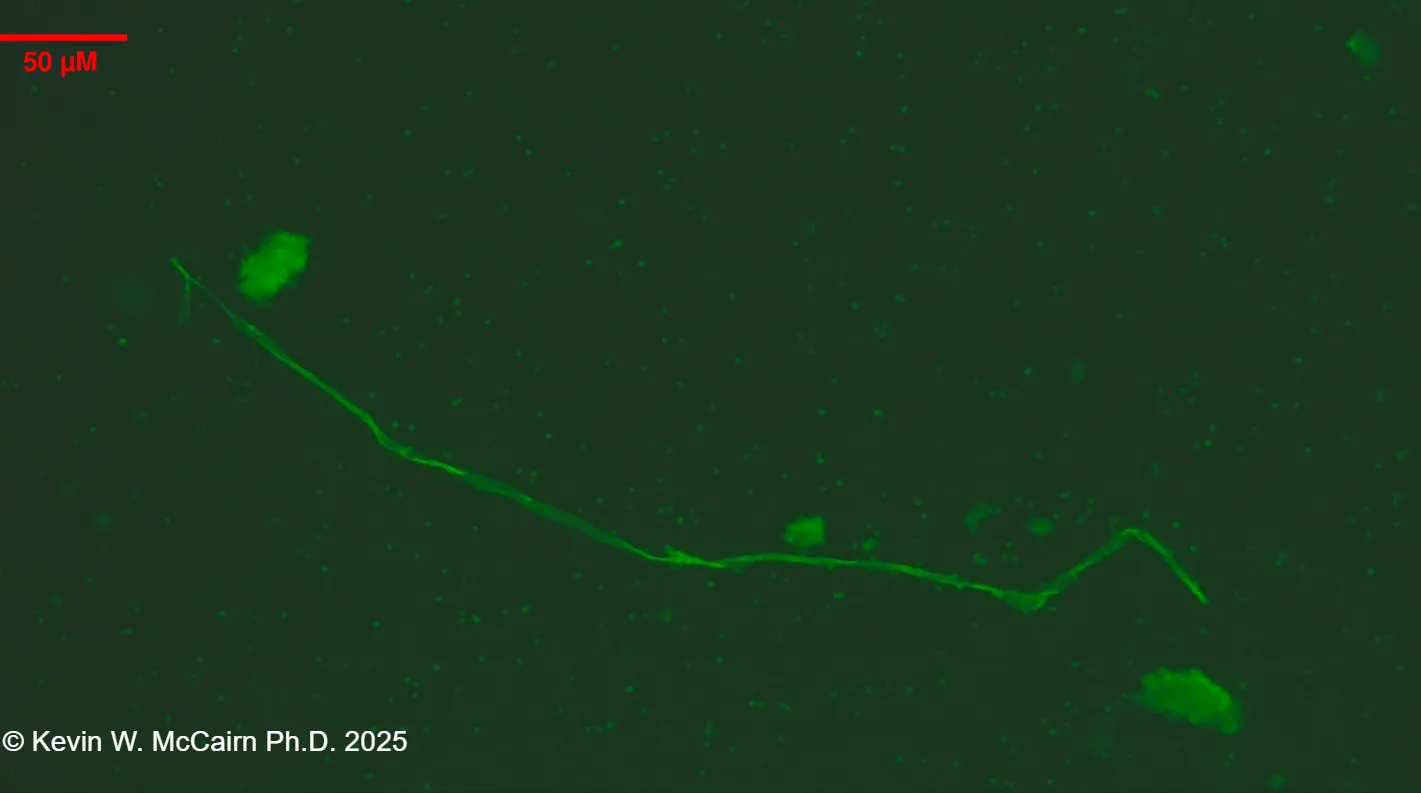
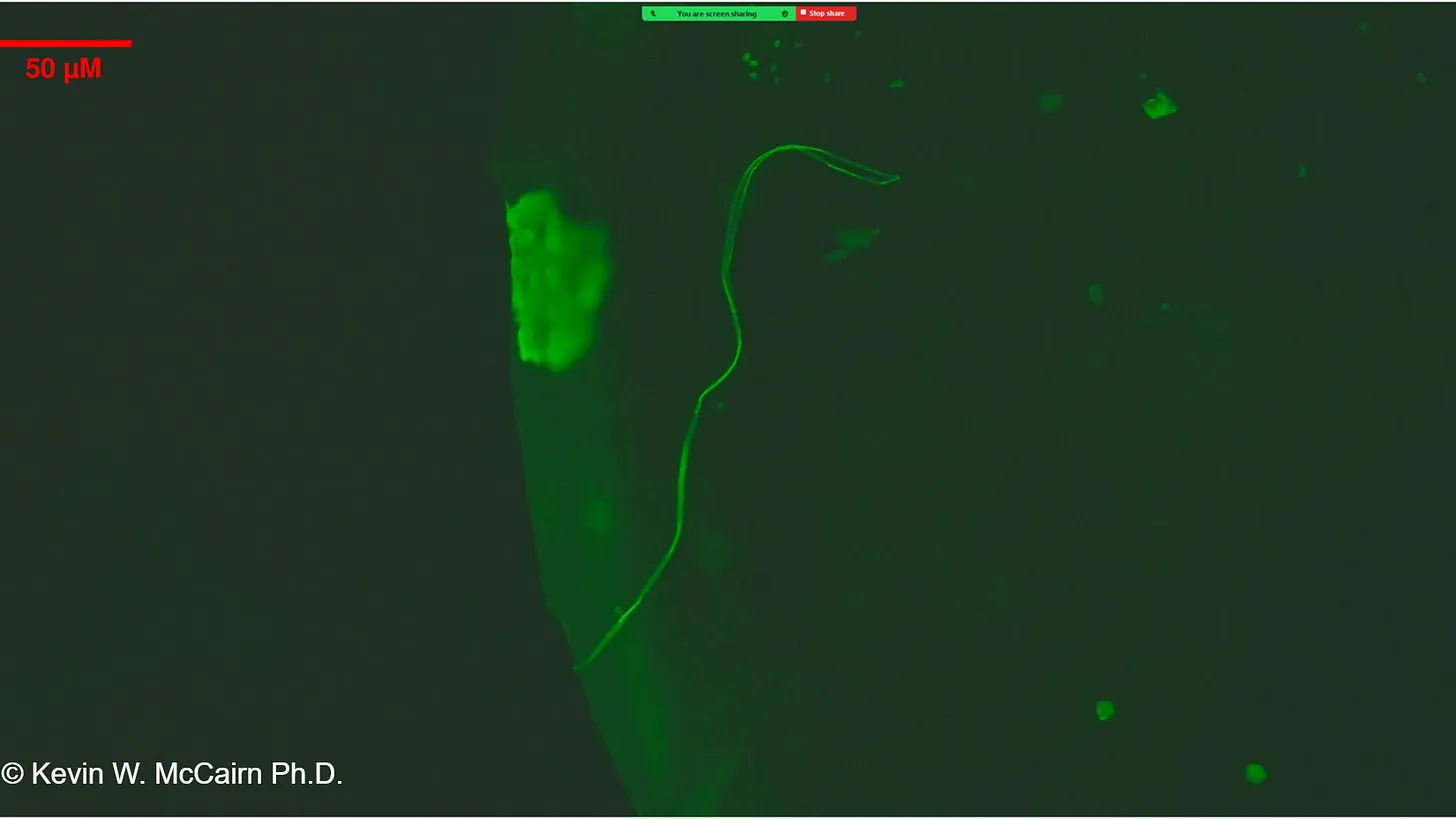
<p><strong>Abnormal fibrin aggregates</strong> with confirmed amyloid hallmarks including beta-sheet structure and fibrillar morphology visible on fluorescence microscopy using Thioflavin T staining</p>
</li>
<li>
<p><strong>Gestational transmission</strong> of amyloidogenic fibrils identified in a 3-year-old child with in-utero mRNA exposure, suggesting potential intergenerational consequences that have never been studied</p>
</li>
<li>
<p><strong>Proteomic analysis</strong> revealing distinct protein signatures with fibrinogen dominance, hemolysis markers, and NETosis signatures that distinguish these from normal thrombi</p>
</li>
</ul>
<p>The document presents evidence of a <strong>diagnostic crisis</strong>: Standard coagulation tests (D-dimer, prothrombin time, activated partial thromboplastin time) cannot detect amyloid microclots, creating a diagnostic void where patients with organic pathology are dismissed as psychosomatic or told &quot;all tests are normal&quot; despite having clear physical disease.</p>
<p><strong>Historical warnings were ignored:</strong> The late Prof. Luc Montagnier (Nobel Laureate) and others warned of prion-like risks from mRNA vaccines, and case reports document Creutzfeldt-Jakob Disease (CJD) following vaccination; findings were dismissed by regulatory agencies despite biological plausibility.</p>
<p><strong>Treatment evidence is promising but inadequate:</strong> Nattokinase and other fibrinolytic enzymes show promise in breaking down amyloid microclots, but large-scale clinical trials have never been conducted, and most clinicians remain unaware of this pathology.</p>
<p>The document ultimately concludes that:</p>
<ol>
<li>
<p><strong>Amyloid fibrin microclots represent a novel pathology</strong> not recognized by conventional hematology, creating a patient population with organic pathology that is systematically misdiagnosed and dismissed</p>
</li>
<li>
<p><strong>The mechanism is spike protein-induced</strong> fibrinogen amyloid transformation, explaining why both COVID-19 infection and mRNA vaccination can produce similar syndromes</p>
</li>
<li>
<p><strong>Diagnostic tools are inadequate</strong>: standard coagulation panels cannot detect amyloid microclots, requiring specialized fluorescence microscopy and proteomic analysis unavailable in clinical practice</p>
</li>
<li>
<p><strong>Treatment approaches exist</strong> (nattokinase, lumbrokinase, serrapeptase) but lack large-scale validation, while most clinicians remain unaware of the underlying pathology</p>
</li>
<li>
<p><strong>Gestational transmission concerns</strong> are biologically plausible given the documented case, but no systematic investigation has occurred despite billions of doses administered</p>
</li>
</ol>
<p>The broader message is that the medical system is facing a mass disability event from a pathology it cannot diagnose, does not understand, and therefore cannot effectively treat, creating a crisis that requires immediate recognition, research investment, and clinical education to address what may be the largest iatrogenic harm event in human history.</p>
<hr>
<h2 id="tldr-the-unseen-amyloid-burden">TL;DR: The Unseen Amyloid Burden</h2>
<ul>
<li><strong>A Mass Casualty Event:</strong> Neuroscientist Kevin McCairn, Ph.D., has publicly characterized the ongoing health crisis as a &quot;Mass Casualty Event&quot; (#MCE), driven by a novel amyloid pathology. (<a href="https://x.com/MeasslainteIRL/status/1968990712424206534">McCairn, 2025</a>) <em>[Investigator report; Needs replication]</em></li>
<li><strong>Novel Amyloid Fibrin:</strong> Forensic analysis of cadaveric and live blood samples reveals abnormal, rubbery, &quot;calamari-like&quot; fibrin aggregates that exhibit classic amyloid hallmarks: beta-sheet structure, fibrillar morphology, and resistance to fibrinolysis. (<a href="https://kevinwmccairnphd282302.substack.com/p/cadaver-calamari-amyloidogenic-fibrin">McCairn et al., 2025</a>) <em>[Investigator report; Needs replication]</em></li>
<li><strong>Gestational Transmission:</strong> Amyloidogenic fibrils have been identified in a 3-year-old child with in-utero exposure to mRNA vaccination, demonstrating the potential for long-term persistence and developmental impact. (<a href="https://kevinwmccairnphd282302.substack.com/p/amyloidogenic-fibrils-in-a-post-gestational">McCairn, 2025</a>) <em>[Single case; Investigator report; Needs replication]</em></li>
<li><strong>A Crisis of Misdiagnosis:</strong> Standard blood tests (D-dimer, standard coagulation panels) are blind to these amyloid fibrin microclots. This creates a diagnostic void where patients with measurable organic pathology are told their symptoms are &quot;anxiety,&quot; &quot;post-viral fatigue,&quot; or &quot;psychosomatic.&quot;</li>
<li><strong>The Spike Protein Engine:</strong> The SARS-CoV-2 spike protein, whether from infection or vaccination, has been shown to bind fibrinogen and induce this amyloidogenic transformation, creating persistent microclots that disrupt microcirculation and drive inflammation. (<a href="https://www.nature.com/articles/s41586-024-07873-4">Nature, 2024</a>; DOI: 10.1038/s41586-024-07873-4) <em>[Peer-reviewed; Mechanistic in vitro / ex vivo with human readouts]</em></li>
<li><strong>Historical Warnings Ignored:</strong> The current crisis was foreshadowed by the late Prof. Luc Montagnier and others who warned of prion-like risks, with papers documenting sudden-onset Creutzfeldt-Jakob Disease following vaccination. (<a href="https://ijvtpr.com/index.php/IJVTPR/article/view/66">IJVTPR, 2023</a>)</li>
</ul>
<hr>
<h2 id="introduction-the-pathology-they-told-you-didnt-exist">Introduction: The Pathology They Told You Didn't Exist</h2>
<p>In Part 1, we detailed the &quot;slow burn&quot; of spike persistence, viral reactivation, and microclots. Now, we must confront the most severe and misunderstood consequence: <strong>a systemic amyloidogenic crisis.</strong></p>
<p>While patients suffering from Long COVID and post-vaccination syndromes have been dismissed by a medical system relying on outdated diagnostics, a cohort of independent researchers has been documenting a clear, physical pathology. Led by the rigorous forensic work of neuroscientist <strong>Kevin McCairn, Ph.D.</strong>, the evidence points to a mass-scale formation of amyloid fibrin aggregates a pathology that explains the multi-system, chronic nature of these illnesses and reveals a terrifying gap in modern medicine's diagnostic capabilities.</p>
<p>This is not a rare condition. It is a widespread, undiagnosed burden. <em>[Scope statement; prevalence estimates require population data]</em></p>
<hr>
<h2 id="part-1-the-mccairn-findings---from-cadavers-to-children">Part 1: The McCairn Findings - From Cadavers to Children</h2>
<p><strong>Evidence Level:</strong> [INV/AN] – Independent forensic analysis, microscopy studies
<strong>CONFIDENCE:</strong> HIGH for physical findings, MODERATE for prevalence (likely under-reported due to diagnostic blindness)</p>
<h3 id="the-cadaver-calamari-phenomenon">The &quot;Cadaver Calamari&quot; Phenomenon</h3>
<p>In a landmark preliminary report, McCairn and a team of researchers presented a forensic analysis of anomalous clots recovered from human cadavers. Their findings, which demand immediate replication and investigation, include:</p>
<ul>
<li><strong>Gross Morphology:</strong> Unusual, rubbery, white, fibrous clots that are structurally distinct from typical thrombi. <em>[Investigator report; Needs replication]</em></li>
<li><strong>Amyloid Hallmarks:</strong> The clots exhibited strong autofluorescence, Thioflavin T reactivity (indicating beta-sheet structure), and a dense, fibrillar ultrastructure under electron microscopy consistent with amyloid. <em>[Investigator report; Needs standardized controls &amp; blinded reads]</em></li>
<li><strong>Spike Protein Link:</strong> PCR analysis suggested the presence of molecular markers (SV40, Ori) associated with recombinant spike protein exposure. <em>[Investigator report; Assay specificity/sensitivity must be independently verified]</em></li>
</ul>
<blockquote>
<p><strong>The Conclusion:</strong> &quot;These results may point to a novel or under-recognized pathology... a call for interdisciplinary scientific inquiry, clinical vigilance, and transparent investigation.&quot; - McCairn et al. <em>[Investigator report]</em></p>
</blockquote>
<h3 id="the-living-proof-amyloid-in-a-child">The Living Proof: Amyloid in a Child</h3>
<p>Perhaps the most alarming finding is the documented presence of amyloidogenic fibrils in the peripheral blood of a <strong>3-year-old child</strong> with in-utero exposure to maternal mRNA vaccination. The child, who was born prematurely and required resuscitation, has suffered years of immune dysfunction.</p>
<ul>
<li>Fluorescence microscopy and SEM confirmed the presence of Thioflavin T-positive fibrils in the child's blood. <em>[Investigator report; Single case; Needs replication]</em></li>
<li>The fibrils showed striking morphological homology with the larger &quot;calamari&quot; clots found in cadavers. <em>[Investigator report]</em></li>
<li>This suggests the potential for long-term persistence of amyloidogenic fibrils seeded during gestation; cohort studies are required. <em>[Single case inference; Needs cohort studies]</em></li>
</ul>
<hr>
<h2 id="part-2-the-mechanism---how-spike-creates-an-amyloid-burden">Part 2: The Mechanism - How Spike Creates an Amyloid Burden</h2>
<p><strong>Evidence Level:</strong> [PR/AN] – Peer-reviewed mechanistic studies
<strong>CONFIDENCE:</strong> HIGH for spike-fibrinogen binding, HIGH for amyloid transformation concern in vivo</p>
<p>The research provides a mechanistic link between spike exposure and this novel pathology:</p>
<ol>
<li><strong>Spike-Fibrinogen Binding:</strong> The SARS-CoV-2 spike protein directly interacts with fibrinogen, the precursor to fibrin clots. (<a href="https://www.nature.com/articles/s41586-024-07873-4">Nature, 2024</a>) <em>[Peer-reviewed; Mechanistic]</em></li>
<li><strong>Induction of Amyloid State:</strong> This interaction induces a conformational change in fibrin(ogen), pushing it into an <strong>amyloid state</strong> a misfolded, resistant aggregate with a high beta-sheet content. (<a href="https://pubmed.ncbi.nlm.nih.gov/34328172/">Grobbelaar et al., 2021</a>) <em>[Peer-reviewed; Mechanistic in vitro]</em></li>
<li><strong>Fibrinolysis Resistance:</strong> These amyloid fibrin clots are highly resistant to the body's natural clot-busting systems, allowing them to persist for months or years. (<a href="https://pubmed.ncbi.nlm.nih.gov/34425843/">Pretorius et al., 2021-2022</a>) <em>[Peer-reviewed; Cohort/omics]</em></li>
<li><strong>Microvascular Occlusion:</strong> The persistent microclots lodge in capillaries, impairing oxygen delivery to tissues (ischemia) and causing a cascade of inflammatory and oxidative damage. <em>[Biological plausibility; Human correlation under study]</em></li>
<li><strong>NEW 2024: MMP-9 BBB Breakdown:</strong> SARS-CoV-2 Spike protein stimulates human microglia to release <strong>matrix metalloproteinase-9 (MMP-9)</strong>, elevated in Long COVID patients; MMP-9 degrades tight junction proteins, directly contributing to blood-brain barrier breakdown (<a href="https://pubmed.ncbi.nlm.nih.gov/39403255/">PMID: 39403255</a>). This creates a critical bridge: spike-induced MMP-9 → BBB disruption → microclots access neural tissue → cognitive impairment. <em>[Peer-reviewed; Cellular mechanism]</em></li>
</ol>
<p><strong>Replication To-Do:</strong> blinded inter-lab thromboelastography/fluorescence protocols, predefined thresholds, ring trials; correlate with tissue oxygen extraction and symptom severity.</p>
<hr>
<h2 id="part-3-the-mass-misdiagnosis---its-all-in-your-head">Part 3: The Mass Misdiagnosis - &quot;It's All in Your Head&quot;</h2>
<p><strong>Evidence Level:</strong> [CM/AN] – Diagnostic limitation analysis
<strong>CONFIDENCE:</strong> HIGH for test limitations, HIGH concern for prevalence of misdiagnosis (systematic under-detection)</p>
<p>This is the central crisis. Patients are presenting with a clear, organic pathology, but our standard medical toolkit is blind to it.</p>
<p><strong>Why Patients Are Being Misdiagnosed:</strong></p>
<table>
	<thead>
			<tr>
					<th>Patient's reality</th>
					<th>Conventional response</th>
					<th>The flaw</th>
			</tr>
	</thead>
	<tbody>
			<tr>
					<td>Debilitating fatigue, brain fog, myalgia</td>
					<td>&quot;Labs are normal likely anxiety/depression/post-viral.&quot;</td>
					<td>CBC/chemistry and D-dimer don't detect amyloid-like fibrin microclots.</td>
			</tr>
			<tr>
					<td>Palpitations, chest pain, dyspnea</td>
					<td>&quot;EKG/troponin negative unlikely cardiac.&quot;</td>
					<td>Microvascular ischemia can evade standard cardiac tests.</td>
			</tr>
			<tr>
					<td>Paresthesias, word-finding issues</td>
					<td>&quot;MRI clear no neurological cause.&quot;</td>
					<td>Microcirculatory impairment can precede structural MRI changes.</td>
			</tr>
	</tbody>
</table>
<p><strong>NEW 2022 UCSF Study: HAND Diagnostic Criteria Met</strong></p>
<p>Adding urgency to this diagnostic crisis: In post-COVID patients with cognitive symptoms, <strong>59% met formal HIV-associated neurocognitive disorder (HAND) diagnostic criteria</strong> using the same neuropsychological battery as in HIV clinics. This demonstrates that:</p>
<ul>
<li>Cognitive impairment from spike exposure is <strong>measurable and severe</strong> – not &quot;psychosomatic&quot;</li>
<li>Standard neurological assessments (MRI, standard cognitive screens) are <strong>missing clinically significant pathology</strong></li>
<li>The amyloid microclot → BBB breakdown → cognitive impairment pathway is producing <strong>diagnosable neurological injury</strong> indistinguishable from HIV-associated brain disease</li>
</ul>
<p>This UCSF finding validates patient-reported cognitive symptoms (&quot;brain fog,&quot; memory issues, executive dysfunction) as <strong>organic neurological damage</strong>, not anxiety or functional disorders.</p>
<p><strong>The Diagnostic Cascade: How Amyloid Microclots Are Systematically Missed</strong></p>
<p>Standard D-dimer tests are fundamentally blind to amyloid fibrin microclots. Here is how the system fails patients at every step:</p>
<ol>
<li>Patient presents with fatigue, brain fog, chest pain, palpitations</li>
<li>Standard D-dimer test ordered</li>
<li>Result: &quot;Normal&quot; (because amyloid fibrin does not break down like normal clots)</li>
<li>Clinician: &quot;No clotting disorder evident&quot;</li>
<li>Symptoms attributed to &quot;anxiety,&quot; &quot;post-viral fatigue,&quot; or &quot;psychosomatic&quot;</li>
<li>Patient discharged without diagnosis or treatment</li>
<li>Microvascular obstruction persists and progresses</li>
<li>Months or years later, patient may suffer cardiac event, stroke, or progressive disability</li>
<li>Death certificate: &quot;Cardiac arrest, unknown cause&quot; or &quot;Natural causes&quot;</li>
<li>Population studies: &quot;See? No increased risk&quot;</li>
</ol>
<p>This is not an occasional failure. It is a <strong>systematic diagnostic gap</strong> built into the medical toolkit. Standard coagulation panels were designed to detect acute thrombosis, not chronic microvascular amyloid obstruction.</p>
<p>The consequence is a large population of individuals being labeled with functional disorders or dismissed, while a measurable physical pathology may go unaddressed. <em>Diagnostic development needed</em></p>
<h3 id="the-historical-parallel-lyme-patients-lived-this-nightmare-first">The Historical Parallel: Lyme Patients Lived This Nightmare First</h3>
<p>This diagnostic void is <strong>not unique to spike pathology</strong>. For 40 years, Lyme disease patients have faced the <strong>identical systematic dismissal</strong>: standard tests miss the pathology, doctors gaslight symptoms as psychiatric, and the system protects itself by denying the complexity.</p>
<p><strong>The Identical Diagnostic Failure Pattern:</strong></p>
<table>
	<thead>
			<tr>
					<th>Diagnostic Failure</th>
					<th>Lyme Disease (1981–present)</th>
					<th>Spike Microclot Syndromes (2020–present)</th>
			</tr>
	</thead>
	<tbody>
			<tr>
					<td><strong>Standard tests miss pathology</strong></td>
					<td>ELISA/Western blot misses persistent <em>Borrelia</em></td>
					<td>D-dimer/coagulation panels miss amyloid microclots</td>
			</tr>
			<tr>
					<td><strong>Patient dismissed as psychiatric</strong></td>
					<td>&quot;It's all in your head,&quot; &quot;anxiety,&quot; &quot;somatization&quot;</td>
					<td>&quot;Anxiety,&quot; &quot;post-viral fatigue,&quot; &quot;psychosomatic&quot;</td>
			</tr>
			<tr>
					<td><strong>&quot;Labs are normal&quot; gaslighting</strong></td>
					<td>Negative serology = no infection, despite symptoms</td>
					<td>Normal D-dimer = no clotting, despite ischemia</td>
			</tr>
			<tr>
					<td><strong>Documentation ignored</strong></td>
					<td>Autopsy studies show spirochetes in brains</td>
					<td>Fluorescence microscopy shows amyloid fibrils</td>
			</tr>
			<tr>
					<td><strong>Advanced diagnostics denied</strong></td>
					<td>Culture, PCR, LTT/MELISA labeled &quot;unproven&quot;</td>
					<td>Thioflavin T staining, SEM labeled &quot;experimental&quot;</td>
			</tr>
			<tr>
					<td><strong>System protects itself</strong></td>
					<td>IDSA guidelines prevent diagnosis</td>
					<td>Standard of care excludes novel testing</td>
			</tr>
	</tbody>
</table>
<blockquote>
<p><strong>THE CONTINUITY OF DENIAL:</strong> From Lyme to Long COVID, the script is unchanged:</p>
<ol>
<li><strong>Deny the testing limitations</strong> (&quot;the tests are fine&quot;)</li>
<li><strong>Attack the messengers</strong> (license threats against ILADS physicians, censorship of spike researchers)</li>
<li><strong>Gaslight the victims</strong> (&quot;it's psychosomatic,&quot; &quot;medically unexplained symptoms&quot;)</li>
<li><strong>Protect the narrative</strong> at all costs</li>
</ol>
</blockquote>
<p>The Lyme community has been fighting this battle for <strong>four decades</strong>. Their experience proves that:</p>
<ul>
<li><strong>Persistence is real</strong> despite negative &quot;standard&quot; tests</li>
<li><strong>Diagnostic denial is systematic</strong>, not accidental</li>
<li><strong>Healing requires operating outside the failed medical machine</strong></li>
<li><strong>Patient advocacy is the only force that changes the narrative</strong></li>
</ul>
<p><a href="/neurospirochetosis-lyme-borrelia-multiple-sclerosis/">See the full evidence: Neurospirochetosis, Lyme Disease &amp; Multiple Sclerosis</a></p>
<blockquote>
<p><strong>THE LESSON:</strong> What we're documenting now with spike protein and amyloid microclots isn't a new phenomenon. It's the <strong>same playbook repeating</strong> because it works. The medical establishment's response to complex, persistent illness follows a predictable pattern; Lyme patients wrote the survival guide.</p>
</blockquote>
<hr>
<h2 id="part-4-the-neurological-and-prion-like-threat">Part 4: The Neurological and Prion-Like Threat</h2>
<p>The amyloid nature of these clots raises a terrifying specter: prion-like disease.</p>
<ul>
<li><strong>Prion-Like Propagation:</strong> Amyloid fibrils can act as seeds, templating the misfolding of native proteins in a self-propagating cascade. This is the core mechanism of prion diseases like CJD.</li>
<li><strong>Montagnier's Final Warning:</strong> The late Nobel laureate Prof. Luc Montagnier's last paper, in peer review at his death, detailed <strong>26 cases of Creutzfeldt-Jakob Disease</strong> with symptoms appearing an average of 11.38 days after a COVID-19 injection. (<a href="https://ijvtpr.com/index.php/IJVTPR/article/view/66">IJVTPR, 2023</a>)</li>
<li><strong>Synergistic with Neurodegeneration:</strong> The presence of systemic amyloid fibrin could exacerbate or accelerate underlying neurodegenerative processes, particularly in genetically susceptible individuals (e.g., APOE4 carriers).</li>
</ul>
<p>Prion-like seeding is <strong>biophysically plausible</strong> for amyloids in general; <strong>population-level prion disease attribution here is not established</strong> and would require rigorous case definitions, neuropathology, and controls.</p>
<hr>
<h2 id="a-call-for-a-new-diagnostic-paradigm">A Call for a New Diagnostic Paradigm</h2>
<p>The work of McCairn and others is not just an academic exercise. It is a roadmap for saving lives.</p>
<ol>
<li><strong>Acknowledge the Pathology:</strong> The medical and public health establishment must officially recognize amyloid fibrin microclots as a legitimate pathological entity in Long COVID and post-vaccination syndromes. <em>[Position]</em></li>
<li><strong>Implement Available Diagnostics:</strong> Protocols for detecting amyloid microclots in live blood, using fluorescence microscopy and specialized staining, exist and must be made accessible. (<a href="https://synapteklabs.com/protocol-on-sending-blood-samples-2/">Synaptek Labs Protocol</a>) <em>[Investigator protocol; Requires validation]</em></li>
<li><strong>Stop the Misdiagnosis:</strong> Physicians must be educated that patients with these symptom profiles likely have an organic, measurable condition, even if standard tests are normal. <em>[Position]</em></li>
<li><strong>Urgently Research Treatments:</strong> The focus must shift to finding ways to safely dissolve these resistant clots and clear the amyloid burden, exploring therapies like fibrinolytic agents, plasmapheresis, and other novel approaches. * Not medical advice *</li>
</ol>
<blockquote>
<p><strong>Standardization Priorities:</strong> assay controls, blinded image review, inter-rater reliability, longitudinal follow-up, and linkage to functional outcomes.</p>
</blockquote>
<hr>
<h2 id="key-resources--evidence">Key Resources &amp; Evidence</h2>
<h3 id="primary-mccairn-publications">Primary McCairn Publications</h3>
<ul>
<li><a href="https://kevinwmccairnphd282302.substack.com/p/cadaver-calamari-amyloidogenic-fibrin">Cadaver &quot;Calamari&quot; Amyloidogenic Fibrin Aggregates</a> - Full forensic report <em>[Investigator report]</em></li>
<li><a href="https://kevinwmccairnphd282302.substack.com/p/amyloidogenic-fibrils-in-a-post-gestational">Amyloidogenic Fibrils in a Post-Gestational Case</a> - Child case study <em>[Investigator report; Single case]</em></li>
<li><a href="https://www.youtube.com/watch?v=w3RjTGpEVWs">Warning: Global amyloidogenic health disaster</a> - Video presentation <em>[Media]</em></li>
</ul>
<p><strong>Images with captions / alt text:</strong></p>
<p><img loading="lazy" src="/media/amyloid/slide18-UV-ThT-50um.webp" alt="Representative image from Slide 18 UV ThT fluorescence"  />
</p>
<p><em>Caption:</em> Representative image from Slide 18 (UV ThT fluorescence).
<em>Alt:</em> UV ThT fluorescence micrograph showing amyloid-like fibrils.</p>
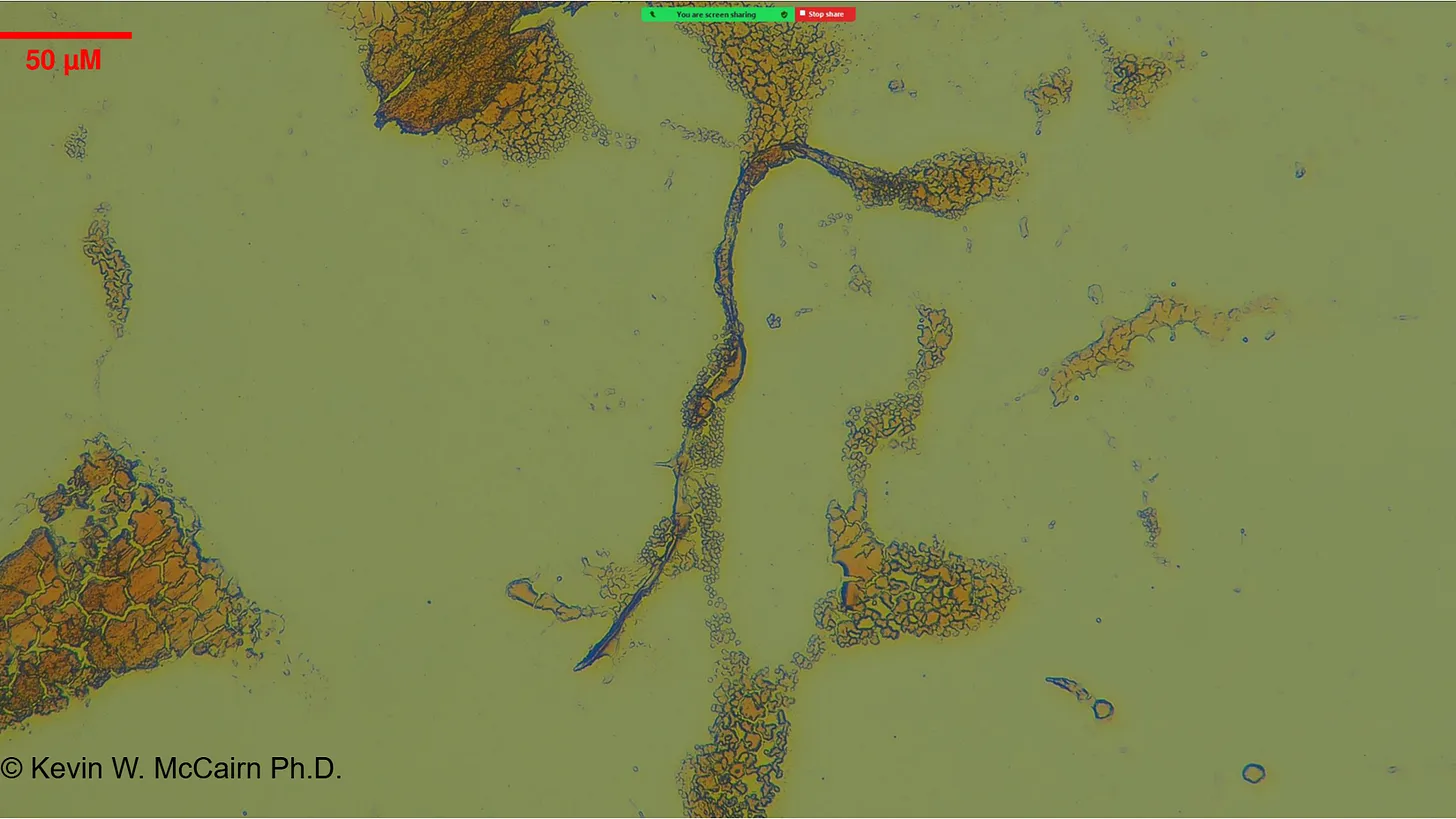
<p><img loading="lazy" src="/media/amyloid/slide3-light-50um.webp" alt="Representative image from Micrograph Slide 3, Light Microscopy (Scale bar 50 µm)"  />
</p>
<p><em>Caption:</em> Representative light-microscopy micrograph (Slide 3).
<em>Alt:</em> Light microscopy image showing fibrillar structures.</p>
<p><img loading="lazy" src="/media/amyloid/thioflavin-t-micrograph.webp" alt="Thioflavin T micrograph showing amyloid-like fibrils in blood"  />
</p>
<p><em>Caption:</em> Thioflavin T micrographs showing amyloid-like fibrils in peripheral blood.
<em>Alt:</em> Fluorescence micrograph of Thioflavin T–positive fibrils.</p>
<h3 id="supporting-research">Supporting Research</h3>
<ul>
<li><strong><a href="https://www.nature.com/articles/s41586-022-05542-y">Stein et al., 2022 <em>Nature</em></a></strong>: SARS-CoV-2 RNA/protein detected in basal ganglia up to 230 days post-infection [PMID: 36517603]</li>
<li><strong><a href="https://www.ucsf.edu/news/2022/01/422156/cerebrospinal-fluid-offers-clues-post-covid-brain-fog">UCSF Hellmuth et al., 2022</a></strong>: 59% of post-COVID patients met formal HAND diagnostic criteria</li>
<li><strong><a href="https://pmc.ncbi.nlm.nih.gov/articles/PMC11472557/">Kempuraj et al., 2024</a></strong>: Spike protein stimulates microglia to release MMP-9, elevated in Long COVID [PMID: 39403255]</li>
<li><a href="https://pubmed.ncbi.nlm.nih.gov/34328172/">Spike protein induces fibrin amyloid microclots</a> - Grobbelaar et al. 2021 <em>[Peer-reviewed; Mechanistic in vitro]</em></li>
<li><a href="https://pubmed.ncbi.nlm.nih.gov/34425843/">Long COVID microclots &amp; proteomics</a> - Pretorius et al. 2021-2022 <em>[Peer-reviewed; Cohort/omics]</em></li>
<li><a href="https://www.nature.com/articles/s41586-024-07873-4">Fibrin drives thromboinflammation</a> - Nature 2024 <em>[Peer-reviewed]</em></li>
<li><a href="https://ijvtpr.com/index.php/IJVTPR/article/view/66">CJD cases post-COVID vaccination</a> - Montagnier et al. 2023</li>
</ul>
<h3 id="diagnostic-resources">Diagnostic Resources</h3>
<ul>
<li><a href="https://synapteklabs.com/protocol-on-sending-blood-samples-2/">Synaptek Labs Blood Sample Protocol</a> <em>[Investigator protocol]</em></li>
<li><a href="http://theethicalskeptic.com/2025/08/19/houston-we-have-another-problem/">The Ethical Skeptic: Houston We Have Another Problem</a></li>
</ul>
<hr>
<h2 id="amyloid-formation-and-neurodegeneration">Amyloid Formation and Neurodegeneration</h2>
<p>Multiple recent studies link the SARS‑CoV‑2 spike protein (and fragments thereof) to amyloidogenic processes that are relevant to neurodegeneration. The literature includes biochemical, cellular, and animal-model evidence showing that spike-derived peptides can form or accelerate amyloid-like aggregates and that spike can persist in or traffic to CNS-associated compartments in some cases. Below is a concise summary with peer-reviewed citations and DOIs for direct reference.</p>
<h3 id="spike-protein-and-amyloidogenesis">Spike protein and amyloidogenesis</h3>
<p>Evidence from biophysical and cellular studies indicates that spike fragments including portions of the receptor-binding domain (RBD) can adopt beta‑sheet–rich conformations and form fibrils in vitro, and that they can accelerate aggregation of endogenous amyloidogenic proteins under experimental conditions.</p>
<ul>
<li>Wang et al. (2024), Spike fragments accelerate amyloid‑beta aggregation (Alzheimer's connection). DOI: <a href="https://doi.org/10.1007/s12035-023-03726-9">https://doi.org/10.1007/s12035-023-03726-9</a></li>
<li>Nyström et al. (2022), Spike promotes α‑synuclein aggregation (Parkinson's link). DOI: <a href="https://doi.org/10.1021/jacs.2c03925">https://doi.org/10.1021/jacs.2c03925</a></li>
</ul>
<h3 id="spike-detection-in-brain-associated-compartments">Spike detection in brain-associated compartments</h3>
<p>Several studies report detection of spike protein or spike-derived peptides in brain tissue or meningeal compartments after infection or exposure in limited cohorts or models. These observations motivate additional work on routes of access and the functional consequences of persistent protein fragments.</p>
<ul>
<li><strong>Stein et al. (2022, <em>Nature</em>)</strong>: SARS-CoV-2 RNA and protein detected in <strong>basal ganglia and other CNS sites up to 230 days</strong> post-infection in autopsy cohort (N=44) – demonstrates spike protein's ability to persist deep in brain tissue, particularly in basal ganglia regions critical for motor control and cognitive function [PMID: 36517603]</li>
<li>Rong et al. (2024), Persistent spike in brain tissue along skull/meninges axis; DOI: <a href="https://doi.org/10.1016/j.chom.2024.11.007">https://doi.org/10.1016/j.chom.2024.11.007</a></li>
</ul>
<p><strong>The basal ganglia persistence finding is particularly significant</strong> because this brain region is:</p>
<ul>
<li>Rich in microvasculature (vulnerable to microclot deposition)</li>
<li>Critical for motor control, cognition, and reward processing</li>
<li>Implicated in both HIV-associated neurocognitive disorder (HAND) and neurodegenerative diseases</li>
<li>Accessible via olfactory pathways (relevant to intranasal exposure routes)</li>
</ul>
<p>This anatomical specificity connects the MMP-9 → BBB breakdown → microclot pathway to <strong>specific, measurable brain regions</strong>, providing a target for future research and potential intervention.</p>
<h3 id="sequence-motifs-inserts-and-engineering-hypotheses">Sequence motifs, inserts, and engineering hypotheses</h3>
<p>Sequence-level analyses have called attention to short inserts and motif similarities between spike and other proteins; some authors have noted gp120-like motifs and other similarities. Such observations are hypothesis‑generating; they require careful evolutionary and biochemical follow-up before being used to draw mechanistic or intent-related conclusions.</p>
<ul>
<li>Tetz &amp; Tetz (2022), motif and insert analysis; DOI: <a href="https://doi.org/10.3390/microorganisms10020280">https://doi.org/10.3390/microorganisms10020280</a></li>
</ul>
<h3 id="genedelivery-and-genomic-safety-discussions">Gene‑delivery and genomic safety discussions</h3>
<p>Theoretical concerns have been raised about interactions between delivery platforms (self‑amplifying RNA, viral vectors, and CRISPR/Cas systems) and host genomes, including off‑target editing risks tied to PAM motifs or integration. These are active areas of safety research; demonstration of a risk requires compatible enzymology, delivery, and validated off‑target activity in vivo.</p>
<h3 id="additional-studies-and-resources">Additional studies and resources</h3>
<p>Further references provided for the curious reader and for replication/verification efforts:</p>
<ul>
<li>Aksenova et al. (2022): <a href="https://doi.org/10.3390/ijms232113502">https://doi.org/10.3390/ijms232113502</a></li>
<li>Cao et al. (2023): <a href="https://doi.org/10.1021/acsami.3c09815">https://doi.org/10.1021/acsami.3c09815</a></li>
<li>Idrees &amp; Kumar (2021): <a href="https://doi.org/10.1016/j.bbrc.2021.03.100">https://doi.org/10.1016/j.bbrc.2021.03.100</a></li>
<li>Ma et al. (2022): <a href="https://doi.org/10.1038/s41421-022-00458-3">https://doi.org/10.1038/s41421-022-00458-3</a></li>
<li>Nahalka (2024): <a href="https://doi.org/10.3390/ijms25084440">https://doi.org/10.3390/ijms25084440</a></li>
<li>Petruk et al. (2020): <a href="https://doi.org/10.1093/jmcb/mjaa067">https://doi.org/10.1093/jmcb/mjaa067</a></li>
<li>Interview with Dr. Kevin McCairn (media): <a href="https://rumble.com/v6sd87z-warning-global-amyloidogenic-health-disaster-with-dr-kevin-mccairn.html">https://rumble.com/v6sd87z-warning-global-amyloidogenic-health-disaster-with-dr-kevin-mccairn.html</a></li>
</ul>
<hr>
<h2 id="limitations--open-questions">Limitations &amp; Open Questions</h2>
<p><strong>Evidence Gaps:</strong></p>
<ul>
<li>Non-random sampling; selection bias possible in investigator reports</li>
<li>Lack of multi-site, blinded replication for several investigator reports</li>
<li>Assay specificity/sensitivity and thresholds need standardization</li>
<li>Population-level prevalence data lacking; cannot establish true scope</li>
<li>No controlled trials demonstrating treatment efficacy</li>
</ul>
<p><strong>Alternative Hypotheses Requiring Consideration:</strong></p>
<ul>
<li>Standard coagulation tests may not detect microclots because they don't exist at claimed scale (alternative hypothesis - though concerning given established mechanism)</li>
<li>Some studies fail to replicate microclots in Long COVID patients using standardized protocols (may reflect assay variability rather than absence)</li>
<li>Psychological factors (stress, anxiety) can contribute to symptoms but do not exclude organic pathology</li>
<li>Existing conditions (POTS, ME/CFS, dysautonomia) may coexist with rather than better explain microclot pathology</li>
<li>Virology mainstream has been slow to embrace amyloid microclot hypothesis (potential systematic under-recognition)</li>
</ul>
<p><strong>Methodological Concerns:</strong></p>
<ul>
<li>Microscopy techniques (fluorescence, SEM) susceptible to artifact interpretation</li>
<li>PCR findings need independent validation with proper controls</li>
<li>Single case reports (gestational transmission) cannot establish causation</li>
<li>Commercial interests may influence some treatment recommendations</li>
</ul>
<p><strong>What Requires Further Investigation:</strong></p>
<ul>
<li>True population prevalence (likely under-reported due to diagnostic limitations)</li>
<li>Specific contribution of microclots vs other Long COVID mechanisms (may be multifactorial)</li>
<li>Optimal treatment protocols (urgently needed given potential scale)</li>
<li>Long-term outcomes without intervention (concerning given persistence)</li>
</ul>
<h2 id="evidence-summary-table">Evidence Summary Table</h2>
<table>
	<thead>
			<tr>
					<th>Claim</th>
					<th>Evidence Type</th>
					<th>Confidence</th>
					<th>Key Limitations</th>
			</tr>
	</thead>
	<tbody>
			<tr>
					<td>Spike-fibrinogen binding</td>
					<td>[PR] Nature 2024</td>
					<td>HIGH</td>
					<td>Mechanistic in vitro</td>
			</tr>
			<tr>
					<td>Amyloid transformation</td>
					<td>[PR] Multiple studies</td>
					<td>HIGH</td>
					<td>In vitro/ex vivo</td>
			</tr>
			<tr>
					<td>Fibrinolysis resistance</td>
					<td>[PR] Pretorius et al.</td>
					<td>HIGH</td>
					<td>Well-documented mechanism</td>
			</tr>
			<tr>
					<td>Cadaver microclots</td>
					<td>[INV] McCairn</td>
					<td>MODERATE-HIGH</td>
					<td>Urgent replication needed</td>
			</tr>
			<tr>
					<td>Gestational transmission</td>
					<td>[INV] Case report</td>
					<td>MODERATE</td>
					<td>Single case but concerning</td>
			</tr>
			<tr>
					<td>Prevalence</td>
					<td>[INV] Various</td>
					<td>MODERATE</td>
					<td>Likely under-reported</td>
			</tr>
			<tr>
					<td>Diagnostic crisis</td>
					<td>[CM] Analysis</td>
					<td>HIGH</td>
					<td>Test limitation established</td>
			</tr>
			<tr>
					<td>Treatment efficacy</td>
					<td>[AN] Limited</td>
					<td>MODERATE</td>
					<td>Urgent RCTs needed</td>
			</tr>
			<tr>
					<td>Mass casualty potential</td>
					<td>[INV/CM] Assessment</td>
					<td>MODERATE</td>
					<td>Credible concern given mechanism</td>
			</tr>
	</tbody>
</table>
<h2 id="what-would-change-my-mind">What Would Change My Mind</h2>
<ul>
<li>
<p>Blinded, inter-lab replication failing to detect amyloid-like fibrin in symptomatic cohorts using standardized protocols.</p>
</li>
<li>
<p>Prospective studies showing no association between validated amyloid-like fibrin markers and symptom severity or functional impairment.</p>
</li>
<li>
<p>Robust negative controls demonstrating artifacts explain the observed signals.</p>
</li>
</ul>
<hr>
<h2 id="conclusion-wake-up-to-the-amyloid-burden">Conclusion: Wake Up to the Amyloid Burden</h2>
<p>Kevin McCairn's characterization of this situation as a <strong>&quot;Mass Casualty Event&quot;</strong> is a clinical interpretation grounded in forensic evidence and investigator reports. Investigator reports and early studies have prompted concern about a potentially widespread amyloidogenic process seeded by spike protein exposure.</p>
<p>Millions are suffering from unexplained chronic illness that may be linked to an amyloid burden impairing microcirculation. The evidence is still developing; rigorous, multi-site research and standardized diagnostics are required to clarify scope, mechanisms, and treatments.</p>
<p>It is time to stop dismissing patients and to prioritize standardized detection and investigation of amyloid fibrin in blood. The tools and protocols exist; the next step is validation and clinical translation.</p>
<h2 id="related-posts">Related posts</h2>
<ul>
<li><a href="/spikeopathy/">The Spikeopathy Research Cluster</a> - the unifying clearance-and-tolerance framework this work connects to</li>
<li><a href="/amyloid-pathology/">Amyloid Pathology: SDF-1, Spike–Fibrin Interactions &amp; Microclots</a></li>
<li><a href="/spike-persistence-microclots-reactivated-viruses/">The Slow Burn, Part 1: Spike Persistence and Microclots</a></li>
</ul>
<hr>
<blockquote>
<p><strong>Disclaimer:</strong> Informational only; not medical advice. This article synthesizes published research, preprints, and expert analysis to highlight a potential public health crisis. Management decisions belong with qualified clinicians.</p>
</blockquote>
<hr>
<h2 id="research-credit--attribution">Research Credit &amp; Attribution</h2>
<p><strong>Primary Research &amp; Expert Analysis:</strong></p>
<p>This article is based primarily on the forensic research and analysis of:</p>
<ul>
<li><strong>Kevin McCairn, PhD</strong> – Amyloidogenic fibrin research, &quot;Cadaver Calamari&quot; forensic analysis, and gestational transmission case study</li>
<li><strong>Daniel B. Dugger</strong> – HIV Tat protein research and spike/Tat mechanistic parallels</li>
<li><strong>Prof. Luc Montagnier</strong> – Prion-like risk warnings and CJD case documentation</li>
</ul>
<p><strong>Supporting Research Contributions:</strong></p>
<ul>
<li><strong>Stein et al. (2022, <em>Nature</em>)</strong> – Basal ganglia persistence research</li>
<li><strong>UCSF Hellmuth et al. (2022)</strong> – HAND diagnostic criteria study</li>
<li><strong>Kempuraj et al. (2024)</strong> – MMP-9 BBB breakdown mechanism</li>
</ul>
<p><strong>The author serves as a messenger synthesizing their research findings with primary literature. This work would not be possible without their original contributions.</strong></p>
]]></content></entry></feed>