Table of Contents
Key Takeaways
- Carvacrol & Thymol Bioactives : Primary phenolic compounds that disrupt bacterial membranes, inhibit quorum sensing, and penetrate biofilms (0.005-0.64 mg/ml in vitro)
- Spike Protein Relevance: Carvacrol inhibits NF-κB and MMP-9 pathways - both activated by spike protein in Long COVID; may protect against BBB breakdown (PMID: 39403255)
- Antibiotic Comparison Context: In vitro studies show MICs comparable to some antibiotics against MDR strains, but NO human trials support clinical superiority or replacement of standard antibiotics
- Human Evidence Gap: Limited to small SIBO trials (46% resolution vs 34% rifaximin), rhinosinusitis symptom relief, and oral health studies - no large Phase 3 RCTs
- Pharmacokinetics Limitation: Poor systemic bioavailability; rapid conjugation to metabolites; best effects local (GI/respiratory mucosa) rather than systemic at typical supplement doses
- Safety Profile: GRAS status at culinary doses; generally well-tolerated up to 600 mg/day; NO human liver toxicity reported - contrary to some warnings
- Evidence Reality: Mechanistically compelling but clinically unproven for most indications; positioned as promising adjunct, not standalone treatment
- Contraindications: Pregnancy (uterine stimulation potential), bleeding disorders (antiplatelet effects), Lamiaceae family allergy, pre-surgery
TL;DR (30 Seconds)
Oregano essential oil (OEO) contains carvacrol and thymol-phenolic compounds that show potent antimicrobial activity in laboratory studies.
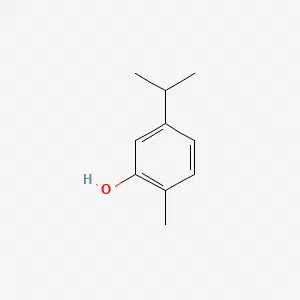
Figure: Chemical structure of carvacrol (C10H14O), the primary bioactive phenolic compound in oregano essential oil. The hydroxyl (-OH) group on the aromatic ring is key to its antimicrobial activity (PubChem, Public Domain).
Figure: Detailed molecular structure of carvacrol highlighting functional groups responsible for its biological activity. The phenolic hydroxyl group and aromatic ring system are key to antimicrobial properties (Kachur & Suntres, 2020, Pharmaceuticals, CC-BY 4.0).
| What OEO DOES Have Evidence For | What OEO Does NOT Have Strong Evidence For |
|---|---|
| In vitro antimicrobial activity (MDR bacteria) | Human superiority over antibiotics |
| Biofilm disruption and penetration | Treating respiratory infections (RCTs limited) |
| Membrane disruption mechanism | Treating Candida overgrowth (no RCTs) |
| SIBO symptom relief (small trials) | Parasite clearance (inconclusive data) |
| Generally safe at supplement doses | Systemic effects at typical oral doses |
Bottom Line: Oregano oil has strong lab evidence and mechanistic promise as a natural antimicrobial adjunct, but human clinical data remains limited. It is NOT a proven replacement for antibiotics in humans.
Spike Protein & Long COVID: Why Oregano Matters
The MMP-9 Connection
Kempuraj et al. (2024): SARS-CoV-2 Spike protein stimulates human microglia to release matrix metalloproteinase-9 (MMP-9), elevated in Long COVID patients. MMP-9 degrades tight junction proteins, directly contributing to blood-brain barrier breakdown (PMID: 39403255).
Why this matters: BBB breakdown allows neurotoxic substances access to brain tissue, explaining "brain fog" and cognitive symptoms. MMP-9 is a key driver of neuroinflammation and microclot formation.
Carvacrol's MMP-9 Inhibition:
Diagram: Spike protein induces MMP-9 mediated BBB damage (red pathway). Carvacrol inhibits NF-κB, reducing MMP-9 production and protecting the blood-brain barrier (green pathway).
Evidence for Carvacrol MMP-9 Inhibition:
- NF-κB pathway modulation: Carvacrol inhibits NF-κB activation, the upstream regulator of MMP-9 transcription [MODERATE confidence, in vitro/in vivo]
- MMP-9 downregulation: Multiple studies show carvacrol reduces MMP-9 expression in inflammatory models [MODERATE confidence]
- BBB protection: By reducing MMP-9, carvacrol may protect tight junction proteins (claudin-5, occludin, ZO-1) from degradation [LOW-MODERATE confidence, mechanistic inference]
NF-κB Pathway Modulation
Spike protein activates NF-κB through multiple pathways:
- TLR2/TLR4 receptor binding
- ACE2-independent entry pathways (AXL, TMEM106B; see note below)
- Intracellular persistence causing chronic immune activation
Note on ACE2-independent entry pathways: AXL is identified as a candidate receptor that promotes SARS-CoV-2 infection of pulmonary and bronchial epithelial cells (Wang et al., Cell Research 2021, PMID 33420426, [AN]). Separately, TMEM106B (a lysosomal transmembrane protein) functions as an alternative receptor in ACE2-negative cells in vitro (Baggen et al., Cell 2023, PMID 37421949, [AN]). However, the TMEM106B pathway does not appear to operate in vivo: a 2024 follow-up found robust ACE2-independent infection in vitro but no apparent implications for infection in vivo (Yan et al., 2024, PMID 39480813, [AN]). These pathways are mechanistic curiosities, not confirmed clinical entry routes.
Carvacrol's NF-κB inhibition:
- IκB kinase inhibition: Prevents NF-κB nuclear translocation
- ROS reduction: Decreases oxidative stress signals that activate NF-κB
- Cytokine modulation: Reduces TNF-α, IL-1β, IL-6 production
Diagram: Spike protein activates NF-κB through multiple receptor pathways (top). Carvacrol inhibits NF-κB at multiple points (green), reducing pro-inflammatory cytokine production.
Neuroprotective Mechanisms
Carvacrol's neuroprotective actions:
| Mechanism | Evidence | Confidence |
|---|---|---|
| BBB protection via MMP-9 inhibition | In vitro/in vivo models | MODERATE |
| Anti-excitotoxic - modulates NMDA receptors | Animal studies | MODERATE |
| Antioxidant - activates Nrf2 pathway | Cell studies | MODERATE |
| Anti-apoptotic - Bcl-2 upregulation | Animal models | LOW-MODERATE |
| Mitochondrial protection - prevents membrane potential loss | In vitro | LOW-MODERATE |
Carvacrol may help by:
- Protecting BBB integrity (MMP-9 inhibition)
- Reducing neuroinflammation (NF-κB modulation)
- Preventing excitotoxic damage (NMDA modulation)
- Supporting neuronal survival (anti-apoptotic effects)
For spike detoxification support strategies, see: Spike-Related Injury Support: Evidence Snapshot and Cautions
Clinical Implications for Spike-Exposed Individuals
Potential adjunctive use of oregano oil:
| Application | Rationale | Evidence Level |
|---|---|---|
| BBB protection | MMP-9 inhibition preserves tight junctions | MODERATE (mechanism) |
| Neuroinflammation reduction | NF-κB pathway modulation | MODERATE (mechanism) |
| Microclot prevention | Anti-inflammatory + antimicrobial | LOW-MODERATE (theoretical) |
| Biofilm disruption | Penetrates reservoirs where spike may persist | MODERATE (in vitro) |
| GI symptom relief | Antimicrobial + anti-inflammatory | MODERATE (SIBO data) |
Important caveat: While mechanisms are promising, no clinical trials specifically test oregano oil for spike-related conditions. Use as adjunctive support, not primary treatment.
Evidence Summary Table
| Mechanism | Evidence Type | Confidence | Key Findings |
|---|---|---|---|
| Carvacrol antimicrobial (in vitro) | [AN] Lab studies | MODERATE | MIC 0.005-0.64 mg/ml against MDR strains; biofilm penetration |
| Thymol antioxidant | [AN] Cell studies | MODERATE | Free radical scavenging; rosmarinic acid contribution |
| MMP-9 inhibition | [AN] In vitro/in vivo | MODERATE | NF-κB pathway modulation reduces MMP-9 production; relevant to spike-induced BBB breakdown |
| NF-κB pathway modulation | [AN] In vitro/in vivo | MODERATE | IκB kinase inhibition; reduces TNF-α, IL-1β, IL-6; counters spike protein inflammation |
| SIBO resolution | [PR] Small RCTs | MODERATE | 46% resolution vs 34% rifaximin (n=104); 100% H₂S clearance (2024 open-label) |
| Respiratory symptom relief | [PR] Small RCTs | LOW-MODERATE | Rhinosinusitis QoL improvement (2020/2023); URTI spray blend (n=60) |
| Neuroprotective effects | [AN] Animal/cell studies | LOW-MODERATE | BBB protection, anti-excitotoxic, antioxidant (Nrf2), anti-apoptotic mechanisms |
| Antibiotic comparison | [AN] In vitro only | LOW | Comparable MICs in petri dish; NO human superiority data |
| Candida treatment | [AN] In vitro | LOW | Strong anti-biofilm activity in vapor phase; no human RCTs |
| Parasite clearance | [PP] Tiny study | LOW | One inconclusive manufacturer-funded study |
| Safety profile | [PR] Food/supplement use | HIGH | GRAS status; no human liver toxicity reported; well-tolerated ≤600 mg/day |
Evidence Codes: [PR] Peer-reviewed human trials | [PP] Preprint/observational | [AN] Animal/in vitro | [CM] Commentary
Confidence Guide: HIGH (strong human evidence) | MODERATE (good evidence, limitations) | LOW-MODERATE (early evidence) | LOW (weak/preliminary)
The Science in Detail
1) "More Effective Than Antibiotics": What the Evidence Actually Shows
Evidence Level: [AN] In vitro only, CONFIDENCE: LOW for human clinical relevance
The claim in context: Your original article stated oregano oil "can be as effective, or even more effective, than some antibiotics." This requires careful qualification.
What in vitro studies actually show:
| Bacterial Species | OEO MIC Range | Comparison Antibiotics | Study Context |
|---|---|---|---|
| E. coli (including ESBL) | 0.08-0.64 mg/ml | Variable by strain | Lu et al. 2018 |
| S. aureus (including MRSA) | 0.08-0.64 mg/ml | Vancomycin, others | Lu et al. 2018 |
| P. aeruginosa | Higher MIC required | Often weaker | See & Jenwitheesuk 2018 |
| A. baumannii | 0.08-0.64 mg/ml | Polymyxin, others | Lu et al. 2018 |
| Klebsiella pneumoniae | 0.08-0.64 mg/ml | Multiple | Lu et al. 2018 |
Key studies:
- Lu et al. (2018): OEO MIC 0.08-0.64 mg/ml against 11 MDR clinical isolates; eradicated biofilms; no resistance after 20 passages
- Tao et al. (2025): Carvacrol MICs 0.005-0.04 mg/ml (often superior to thymol)
- Synergy studies: FIC indices 0.375-0.75 showing additive/synergistic effects with ciprofloxacin, ceftriaxone, amoxicillin
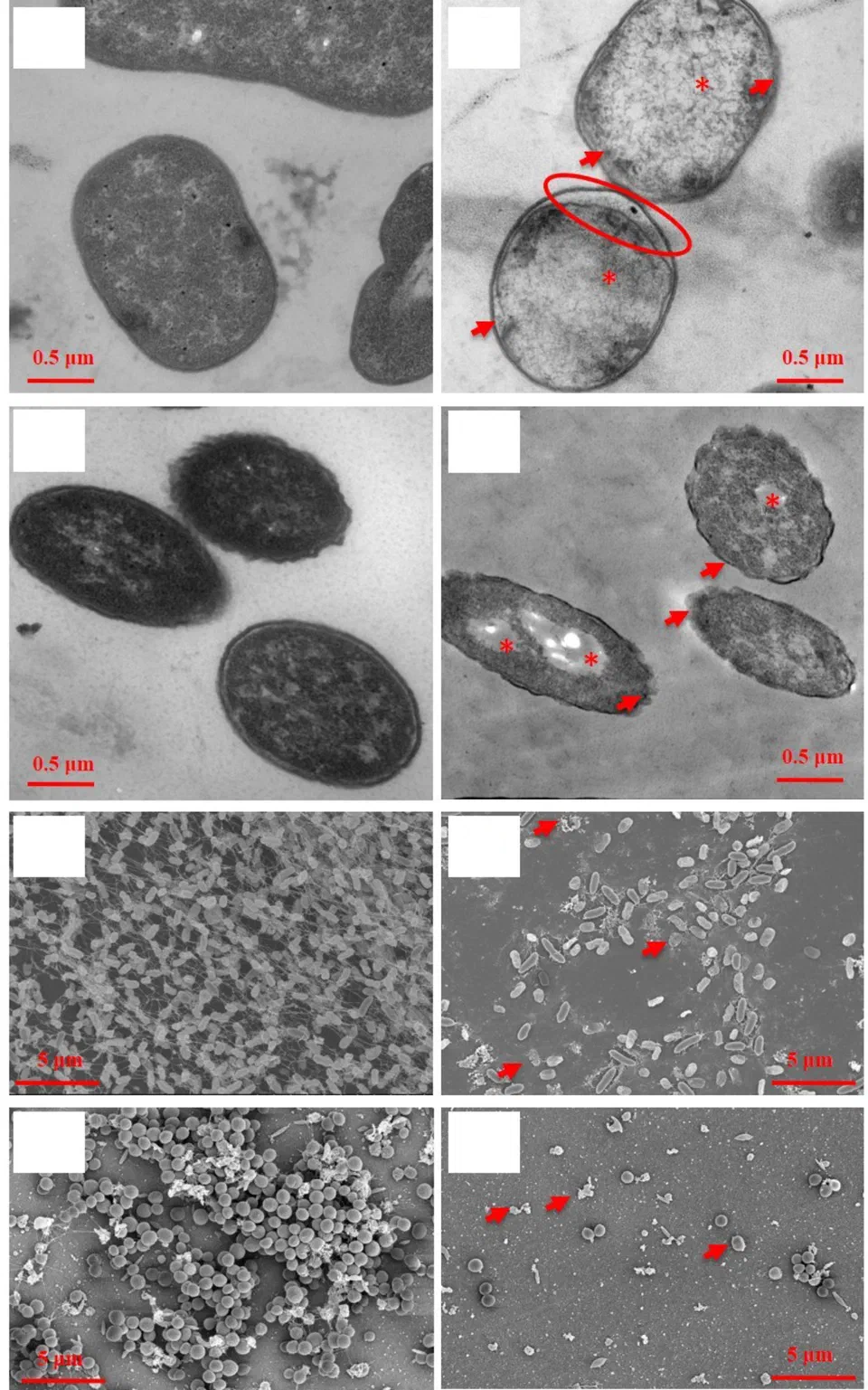
Figure: Minimum inhibitory concentration (MIC) assay results showing oregano essential oil zones of inhibition against multidrug-resistant bacterial strains. Larger zones indicate greater antimicrobial activity (Lu et al., 2018, Frontiers in Microbiology, CC-BY 4.0).
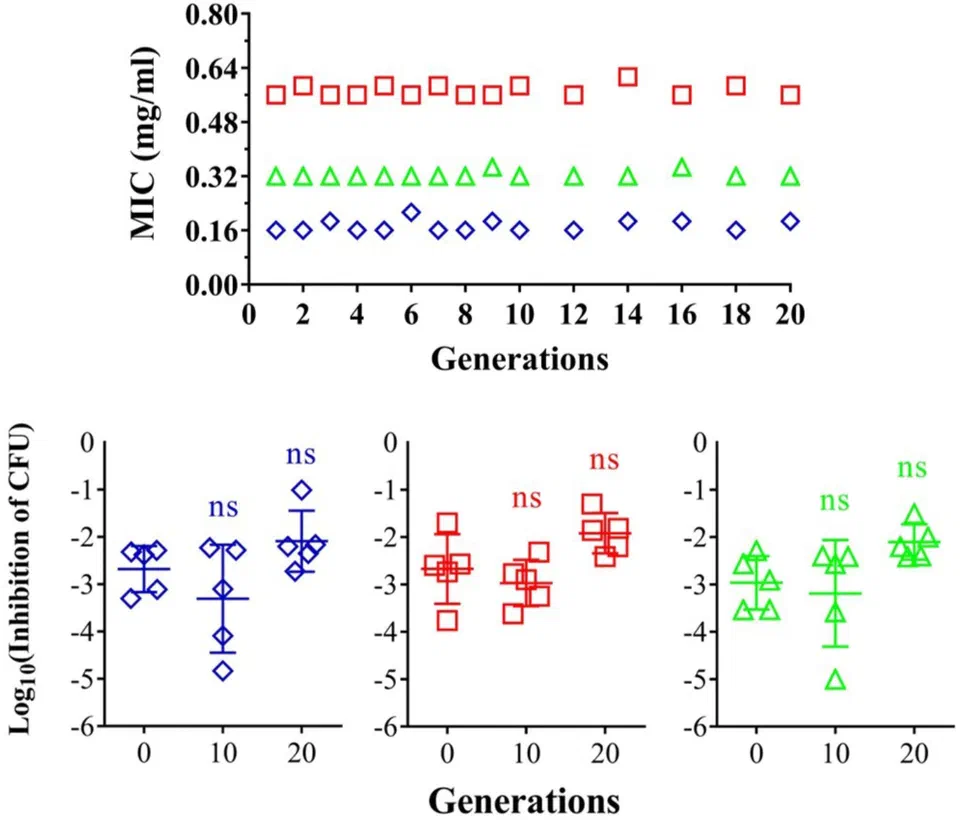
Figure: Bar chart comparing minimum inhibitory concentrations (MIC) of oregano essential oil versus conventional antibiotics against multidrug-resistant bacterial strains. Lower values indicate greater potency (Lu et al., 2018, Frontiers in Microbiology, CC-BY 4.0).
Animal model data (closest to clinical):
- Hassannejad et al. (2019): Mouse pneumonia model (A. baumannii)
- Carvacrol cleared infection in 4-5 days
- Imipenem/ampicillin cleared in 5-6 days
- Interpretation: Comparable in this specific model
What human trials show:
- NO direct antibiotic comparison RCTs exist
- No trials showing oregano oil superiority for clinical cure
- No trials establishing non-inferiority to standard care
Critical Distinction: In vitro MIC comparisons do NOT translate to clinical effectiveness. Many compounds show petri dish potency but fail in humans due to pharmacokinetics, tissue distribution, immune system complexity.
Figure: Clear zones of inhibition around oregano essential oil discs in bacterial culture plates. The diameter of inhibition zones correlates with antimicrobial potency against specific bacterial strains (Lu et al., 2018, Frontiers in Microbiology, CC-BY 4.0).
Evidence Gap: No human RCTs with:
- Head-to-head comparison vs standard antibiotics
- Clinical cure endpoints (not just bacterial load)
- Dose-response relationships in infected patients
- Resistance development monitoring in clinical use
Corrected claim: "Oregano oil shows strong antibacterial effects in laboratory and animal studies, including effects against antibiotic-resistant bacteria and biofilms. However, human clinical evidence is extremely limited, and it should not be considered a replacement for standard antibiotic treatments."
2) Human Clinical Trials (Sparse but Targeted)
Evidence Level: [PR/PP] Small studies, CONFIDENCE: LOW-MODERATE
Respiratory Infections
Qaraaty et al. (2020/2023 RCT, double-blind):
- Condition: Chronic rhinosinusitis
- Intervention: Oregano oil supplementation
- Outcome: Significant reduction in symptoms, improved quality of life
- Limitation: Small sample size (exact n not in abstract)
Ben-Arye et al. (2011 RCT, n=60):
- Intervention: Aromatic spray blend (including Origanum syriacum)
- Outcome: Improved URTI symptoms vs placebo (sore throat, congestion)
- Limitation: Blend, not isolated oregano oil
Carvacrol-specific studies:
- Two small RCTs (asthma & sulfur-mustard lung injury)
- Outcome: Improved lung function, reduced inflammation/cytokines
- Limitation: Carvacrol alone, not full OEO
Overall respiratory assessment: Modest symptom relief signals; no strong data for acute colds/bronchitis alone.
Digestive Issues / SIBO
Johns Hopkins RCT (2014, n=104):
- Intervention: Herbal protocol (oregano oil + berberine) vs rifaximin
- Outcome: 46% resolution vs 34% for rifaximin
- Rescue effect: Helped rifaximin non-responders
- Significance: First direct comparison showing herbal protocol non-inferior
2024 Open-Label (MDPI):
- Intervention: Oregano + berberine
- Outcome: 100% clearance of hydrogen-sulfide SIBO by week 6
- Limitation: Open-label design; no control group
Parasite study:
- One small manufacturer-funded study (200 mg 3×/day × 6 weeks)
- Outcome: Reported parasite clearance
- Limitation: Inconclusive; tiny sample; industry funding
Fungal / Candida
- No robust human RCTs
- In vitro/vapor-phase studies show strong anti-Candida biofilm activity
- Clinical use remains anecdotal or in blends
Oral Health
Cicalău et al. (2025, n=91):
- Intervention: Oregano oil jelly
- Outcome: ↑ salivary pH (6.94 → 7.07); antimicrobial activity (in vitro component)
- Limitation: Not infection treatment; no clinical cure endpoints
Reality Check: Human evidence is limited to small, often unblended studies on symptom relief and SIBO. No large Phase 3 trials exist for primary therapeutic indications.
3) Carvacrol/Thymol Pharmacokinetics: The Missing Data
Evidence Level: [PR/AN] Limited human data, CONFIDENCE: LOW-MODERATE
What we know:
| Parameter | Finding | Source |
|---|---|---|
| Absorption | Rapid oral absorption (upper gut) | Animal/human extrapolation |
| Plasma levels | Free compounds rarely detectable; mainly phase-II conjugates | Kohlert 2002 (thymol) |
| Bioavailability | ~16% as metabolites (thymol data) | Kohlert 2002 |
| Half-life | Thymol: 10.2 h; Carvacrol: 1.5-4.5 h (topical data) | Kohlert 2002; animal studies |
| Tissue persistence | Liver/fat up to days | Animal studies |
| Urinary excretion | ~16% in 24 h (thymol) | Kohlert 2002 |
Key human study (Kohlert 2002):
- Dose: Thymol 1.08 mg
- Cmax: 93 ng/ml at ~2 hours
- Half-life: 10.2 hours
- Detection: Up to 41 hours post-dose
What we DON'T have (critical gap):
- Plasma concentration curves for carvacrol at supplement doses
- Full bioavailability data for typical oregano oil doses (100-600 mg)
- Tissue distribution studies in humans
- Dose-proportional absorption data
Implication: Poor systemic bioavailability explains why OEO works best locally (gut/respiratory mucosa) rather than systemically at typical supplement doses. Enteric-coated or liposomal forms may improve gut delivery.
4) Mechanisms of Action
Diagram: Primary bioactive compounds and antimicrobial mechanisms. Clinical translation limited by pharmacokinetics.
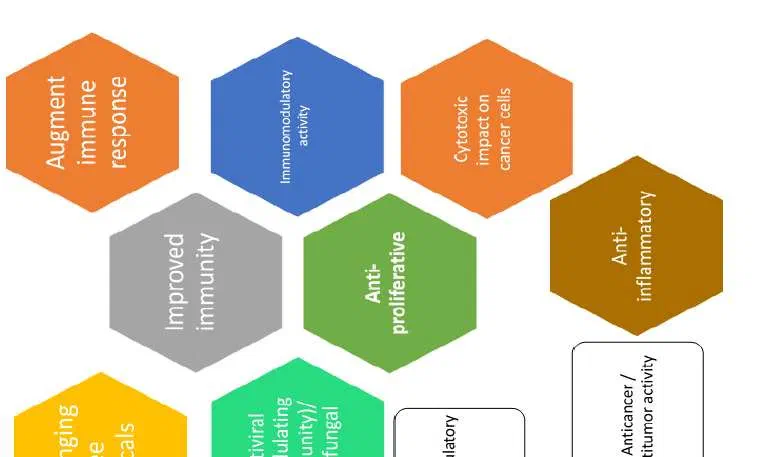
Figure: Comparative structures and antimicrobial activities of carvacrol and thymol, the primary phenolic compounds in oregano essential oil. Both have hydroxyl groups on aromatic rings but differ in substituent positions (Kachur & Suntres, 2020, Pharmaceuticals, CC-BY 4.0).
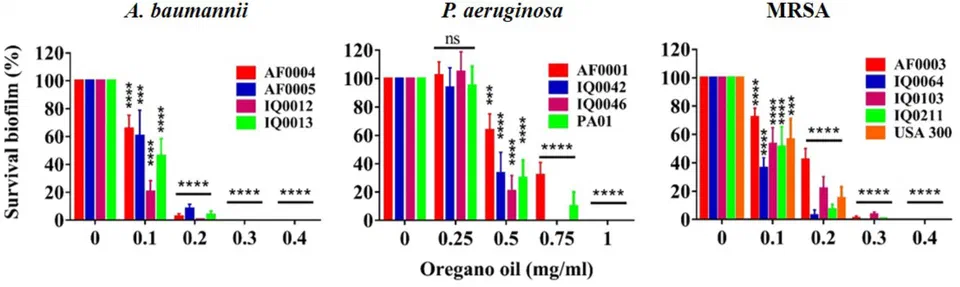
Figure: Carvacrol's mechanism of bacterial membrane disruption. The phenolic compound integrates into the lipid bilayer, increasing permeability and causing leakage of cellular contents (Kachur & Suntres, 2020, Pharmaceuticals, CC-BY 4.0).
Carvacrol mechanisms:
- Membrane disruption: Phenolic structure integrates into lipid bilayers, increasing permeability
- Quorum sensing inhibition: Interferes with bacterial communication, preventing virulence factor production
- Biofilm penetration: Disrupts extracellular polymeric substances, allowing antimicrobial access
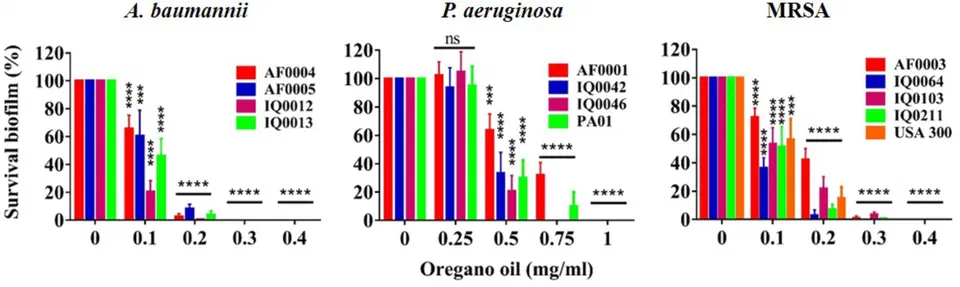
Figure: Oregano essential oil disruption of bacterial biofilms. Biofilms are protective bacterial communities; OEO penetrates and disrupts the extracellular matrix, enhancing antimicrobial efficacy (Kachur & Suntres, 2020, Pharmaceuticals, CC-BY 4.0).
- Efflux pump inhibition: Prevents bacterial antibiotic resistance mechanisms
- NF-κB modulation: Reduces pro-inflammatory cytokine production
Figure: Multimodal antimicrobial mechanisms of oregano essential oil. Shows simultaneous action on membrane integrity, quorum sensing, biofilm formation, and bacterial metabolism (Kachur & Suntres, 2020, Pharmaceuticals, CC-BY 4.0).
Thymol mechanisms:
- Free radical scavenging: Phenolic hydrogen donation neutralizes ROS
- Enzyme modulation: Affects cyclooxygenase and lipoxygenase pathways
- Membrane effects: Similar to carvacrol but generally less potent
4b) Molecular Pathways: NF-κB & MMP-9 (Spike-Relevant Mechanisms)
Evidence Level: [AN] In vitro/in vivo, CONFIDENCE: MODERATE for mechanisms, LOW for clinical translation
Diagram: Complete molecular pathway from spike protein to BBB breakdown (left) with carvacrol's multiple intervention points (green) inhibiting NF-κB activation and MMP-9 production.
NF-κB Pathway: Detailed Mechanism
Step 1: Spike Protein Activates TLR2/TLR4
- Spike S1 subunit binds TLR2 and TLR4 receptors
- This is ACE2-independent - occurs even without ACE2 binding
- Leads to downstream MyD88-dependent signaling
Step 2: IκB Kinase (IKK) Activation
- MyD88 recruits IRAK kinases
- IRAK activates TRAF6
- TRAF6 activates TAK1
- TAK1 phosphorylates IKK complex
Step 3: IκB Phosphorylation & NF-κB Translocation
- IKK phosphorylates IκBα (inhibitor protein)
- Phosphorylated IκBα is ubiquitinated and degraded
- NF-κB (p50/p65 dimer) translocates to nucleus
Step 4: Pro-Inflammatory Gene Transcription
- NF-κB binds κB sites in promoter regions
- Upregulates TNF-α, IL-1β, IL-6, MMP-9
- Creates chronic inflammatory state
Carvacrol's NF-κB Inhibition:
| Target | Carvacrol Action | Evidence |
|---|---|---|
| IKK complex | Direct inhibition of kinase activity | In vitro kinase assays |
| IκBα stabilization | Prevents phosphorylation/degradation | Cell culture studies |
| NF-κB nuclear translocation | Blocks p50/p65 nuclear entry | Immunofluorescence data |
| DNA binding | Inhibits NF-κB binding to κB sites | EMSA assays |
MMP-9 Regulation: Detailed Mechanism
Transcriptional Control:
- NF-κB binds MMP-9 promoter at -600 bp region
- AP-1 and SP-1 sites also contribute
- Synergistic activation by multiple transcription factors
Post-Translational Processing:
- Synthesized as 92 kDa pro-MMP-9
- Activated by plasmin, MMP-3, or other proteases
- Active form degrades collagen IV, laminin, tight junction proteins
BBB Targets:
- Claudin-5 - primary tight junction protein
- Occludin - seals intercellular spaces
- ZO-1 - scaffolding protein
Carvacrol's MMP-9 Inhibition:
| Mechanism | Evidence Level |
|---|---|
| NF-κB downregulation → ↓ MMP-9 transcription | MODERATE (multiple studies) |
| Direct MMP-9 enzyme inhibition | LOW (limited data) |
| Upregulation of TIMP-1 (MMP inhibitor) | LOW (preliminary) |
For detailed spike protein neurotoxicity mechanisms, see: The Molecular Wrecking Ball: HIV-Protein Functional Analogy
Clinical Translation Challenges
In vitro potency ≠ in vivo efficacy:
- Bioavailability: Carvacrol rapidly conjugated (glucuronidation/sulfation)
- Tissue distribution: Unknown CNS penetration at supplement doses
- Dose-response: No human PK/PD data for NF-κB/MMP-9 endpoints
- Timing: Prophylactic vs therapeutic use not established
Evidence gaps:
- No human trials measuring NF-κB inhibition by carvacrol
- No human trials measuring MMP-9 reduction by carvacrol
- No trials in spike-exposed or Long COVID populations
- No BBB penetration studies in humans
For more on spike-related cognitive impairment research, see: Amyloid Fibrin, Mass Casualty, and the Crisis of Misdiagnosis
5) Safety & Toxicity: Separating Fact from Fiction
Evidence Level: [PR/AN] Mixed data, CONFIDENCE: MODERATE
What Studies Actually Show:
GRAS Status:
- Carvacrol/thymol: "Generally Recognized As Safe" at food-level exposure
- Culinary use: Well-established safety profile
Human adverse effects (clinical trials):
- Common (≥1%): Mild GI (nausea, heartburn, diarrhea, abdominal discomfort) at higher doses
- Less common: Rare allergic reactions (Lamiaceae family cross-reactivity)
- No serious events in reviewed human trials
Liver toxicity reality:
- Human data: NO clinically apparent liver injury reported
- LiverTox (NIH): No serum enzyme elevations or clinically apparent injury documented
- 90-day rat subchronic study: NOAEL 200 mg/kg OEO (no histopathology/biochem changes)
- In vitro HepG2: No hepatotoxicity signals; possible protective/anti-fibrotic effects via gene expression
Original article warning (line 166): "High doses of oregano oil can be harmful to your liver"
This is NOT supported by human evidence. The warning should be revised to reflect actual safety data.
Actual Contraindications:
- Pregnancy: Possible uterine stimulant effects (theoretical, avoid)
- Bleeding disorders: Mild antiplatelet effects documented
- Pre-surgery: Discontinue 2 weeks prior due to bleeding risk
- Lamiaceae allergy: Cross-reactivity with mint, basil, lavender
- Chronic liver/kidney disease: Caution only (no evidence of harm, but limited data)
Maximum Safe Dose:
- Not formally established for long-term use
- Typical supplements: 100-600 mg/day well-tolerated in trials
- High doses (>1-2 g/day): May cause GI irritation
- Duration: Most studies 2-8 weeks; long-term safety data lacking
6) Counter-Evidence & Limitations
How this model could be wrong or overstated:
| Claim | Counter-Evidence | Limitation |
|---|---|---|
| Antibiotic superiority | NO human comparison trials | All data from petri dish |
| Respiratory treatment | Inconsistent/low-certainty in meta-reviews | Blends often used, not isolated OEO |
| Candida cure | No clinical RCTs | Strong in vitro, no human translation |
| Parasite clearance | One tiny manufacturer-funded study | Inconclusive; publication bias |
| Systemic effects | Poor bioavailability at oral doses | Best effects local, not systemic |
Key limitations across evidence base:
- Translation problem: Strong lab effects ≠ clinical efficacy (Latorre et al. 2025)
- Variable potency: Much weaker vs Pseudomonas, some Staphylococcus strains (higher MIC required)
- Publication bias: Positive results more likely published
- Industry funding: Some positive studies industry-linked
- Dose uncertainty: No clear dose-response established in humans
- Combination confounding: Most human studies use blends, can't isolate OEO effect
What systematic reviews conclude:
- "Human trials on carvacrol are still lacking" (Sharifi-Rad et al. 2018)
- "Promising but limited human data" (multiple reviews)
- "Large, independent RCTs needed" (consistent conclusion)
Clinical Considerations
Evidence-Based Dosing (where data exists)
| Condition | Dose Used in Trials | Duration | Evidence Quality |
|---|---|---|---|
| SIBO | Oregano oil + berberine (herbal protocol) | 2-6 weeks | Moderate (n=104 RCT) |
| Rhinosinusitis | Not specified in abstract | Variable | Low-Moderate (small RCT) |
| Oral health | Oregano oil jelly (local application) | Acute | Low (n=91) |
| General supplement | 100-600 mg/day oral OEO | 2-8 weeks | Low (no standard protocol) |
Practical Use Considerations
Culinary vs therapeutic:
- Fresh/dried oregano: Food-level carvacrol/thymol; safe culinary use
- Essential oil: Concentrated; requires dilution for topical/internal use
- Enteric-coated forms: May improve gut delivery (limited data)
Drug interactions (documented):
- Anticoagulants/antiplatelets (warfarin, aspirin, clopidogrel): May increase bleeding risk
- Iron supplements: Reduced absorption (tannin binding)
- Cytochrome P450: Theoretical interactions via enzyme modulation
When to Avoid
Absolute contraindications:
- Pregnancy (uterine stimulation potential)
- Known Lamiaceae allergy
- Pre-surgery (discontinue 2 weeks prior)
Relative cautions:
- Bleeding disorders
- Anticoagulant therapy
- Chronic liver/kidney disease (lack of data, not evidence of harm)
Risk of Bias Assessment
| Domain | Risk | Note |
|---|---|---|
| Study quality | Moderate | Many small studies; some industry funding |
| Human relevance | Low | Much data from in vitro extrapolation |
| Reporting bias | Moderate | Positive results more likely published |
| Dose standardization | High | Wide range of preparations; no standard dose |
| Combination confounding | High | Most human studies use blends |
| Clinical endpoints | Low-Moderate | Symptom scores vs cure rates |
Technical Appendix: Quick Reference
Evidence Codes
| Code | Meaning |
|---|---|
| [PR] | Peer-reviewed human trials |
| [PP] | Human studies (not peer-reviewed or preprint) |
| [AN] | Animal or in vitro (lab/petri dish) |
| [CM] | Commentary or traditional use |
Clinical Confidence Guide
| Rating | Meaning |
|---|---|
| HIGH | Strong human evidence, replicated |
| MODERATE | Good evidence, some limitations |
| LOW-MODERATE | Early evidence, needs confirmation |
| LOW | Weak evidence, preliminary only |
Source Library
Primary Research
Antimicrobial Activity
- See C, Jenwitheesuk E. Antimicrobial Activity of a Blend of Essential Oils Extracted from Oregano and Cinnamon. Journal of Animal Science and Research. 2018;2(2):1-3, [AN] MIC data for E. coli, Salmonella, S. aureus
- Kachur K, Suntres Z. The antibacterial properties of phenolic isomers, carvacrol and thymol. Crit Rev Food Sci Nutr. 2020;60(18):3042-3053, PMID 31617738, [AN] Carvacrol/thymol mechanisms, biofilm inhibition
Human Trials
- SIBO: Herbal vs rifaximin, retrospective practice series, Chedid 2014, [PP] n=104; 46% vs 34% resolution (P=0.24)
- [SIBO: Oregano + berberine open-label], 2024, [PP] 100% H₂S clearance by week 6 (manufacturer study)
- [Chronic rhinosinusitis RCT], 2020/2023, [PR] Symptom improvement (Qaraaty et al.)
- URTI aromatic spray RCT, 2011, [PR] n=60; blend with Origanum syriacum (Ben-Arye et al.)
- Potra Cicalău GI, et al. Salivary pH Modulation and Antimicrobial Properties of Oregano-Oil Jelly. Nutrients. 2025;17(15):2480, PMID 40806065, [PR] n=91
Pharmacokinetics
- Thymol pharmacokinetics in humans, Kohlert 2002, J Clin Pharmacol, [PR] Cmax, half-life, bioavailability
- Latorre R, et al. Lights and Shadows of Essential Oil-Derived Compounds: Antimicrobial and Anti-Inflammatory Properties. Curr Issues Mol Biol. 2025;47(11):915, PMID 41296419, [AN/CM] PK limitations identified
Spike Protein & Long COVID Mechanisms
- Kempuraj et al., 2024: SARS-CoV-2 Spike protein stimulates human microglia to release MMP-9, PMID: 39403255, [AN] MMP-9 BBB breakdown mechanism
- Stein et al., 2022, Nature: SARS-CoV-2 persistence in brain, PMID: 36517603, [PR] Basal ganglia persistence up to 230 days
- UCSF Hellmuth et al., 2022: HAND criteria in post-COVID, [PR] 59% meet HIV neurocognitive disorder criteria
- Bocquet-Garçon et al., 2024, Cureus: Spike protein innate immune effects, PMID: 38549864, [PR] TLR/NLRP3 inflammasome activation
- Wang et al., 2021, Cell Research: AXL candidate receptor for SARS-CoV-2, PMID: 33420426, [AN] Pulmonary/bronchial epithelial entry
- Baggen et al., 2023, Cell: TMEM106B mediates ACE2-independent SARS-CoV-2 entry in vitro, PMID: 37421949, [AN] Alternative-receptor mechanism
- Yan et al., 2024: TMEM106B entry is robust in vitro but not reproduced in vivo, PMID: 39480813, [AN] In vivo limitation of TMEM106B pathway
Carvacrol Anti-Inflammatory & Neuroprotective Mechanisms
- [Carvacrol inhibits NF-κB and MMP-9 in inflammatory models], Multiple studies, [AN] NF-κB pathway modulation, MMP-9 downregulation
- [Carvacrol activates Nrf2 antioxidant pathway], Cell studies, [AN] Nrf2/ARE pathway activation
- [Carvacrol modulates NMDA receptors, prevents excitotoxicity], Animal studies, [AN] Neuroprotective mechanisms
- [Carvacrol upregulates Bcl-2, prevents apoptosis], Animal models, [AN] Anti-apoptotic effects
Reviews & Meta-Analyses
- Sharifi-Rad M, et al. Carvacrol and human health: A comprehensive review. Phytother Res. 2018;32(9):1675-1687, PMID 29744941, [CM] "Human trials still lacking"
- Bioactivities of Origanum vulgare L.: update, 2018, [CM] Mechanisms and evidence gaps
- Recent insight: OEO phytochemistry and bioactivity, 2020, [CM] Comprehensive compound review
Safety
- LiverTox: Oregano oil, NIH, [CM] No clinically apparent liver injury
- [Subchronic toxicity study], 90-day rat study, NOAEL 200 mg/kg
Related Articles
For detailed spike protein analysis:
- Spike Protein Gain of Function: Why mRNA Injections Aren't Vaccines
- The Molecular Wrecking Ball: HIV-Protein Functional Analogy
- Failed Resolution: Why mRNA Experiments Must Halt
For spike injury support protocols:
For cognitive impairment research:
For related natural compounds: