Table of Contents
TL;DR: 30-Second Summary
Three-layer genomic defense framework for post-viral protection:
- Layer 1 (Systemic): Broccoli sprouts + curcumin + time-restricted eating
- Layer 2 (Cardiac): Troponin monitoring + ECG + consider MRI if symptoms
- Layer 3 (Mast Cell): Luteolin + baicalein + quercetin for multi-system symptoms
Evidence grade: Strong for Layer 1 RCTs, Moderate for Layers 2-3 mechanistic data.
Our approach: Prioritizes independently verifiable mechanistic evidence over population studies with recognized methodological limitations.
Action: Risk-stratify → Test → Target appropriate layer(s).
Why We Prioritize Mechanistic Evidence
The challenge with population-level safety data:
Independent analyses have identified significant limitations in post-vaccination safety surveillance:
Surveillance System Limitations:
- VAERS, V-safe, EudraVigilance: Under-reporting well-documented (estimated <1% actual capture rate)
- Inconsistent follow-up and verification of reported events
- Limited long-term tracking (most surveillance ends at 6-12 months)
- Passive reporting systems dependent on healthcare provider recognition
Observational Study Concerns:
- Industry-funded studies with disclosed conflicts of interest
- Inadequate control groups (comparing to historical baselines rather than proper controls)
- Short follow-up periods (weeks/months, not years)
- Selective outcome reporting (emphasizing null findings, downplaying signals)
- Publication bias favoring industry-sponsored outcomes
Regulatory Review Limitations:
- Reliance on manufacturer-submitted data without independent verification
- Limited post-marketing surveillance infrastructure
- Regulatory capture concerns (agency funding from vaccine manufacturers)
- Prevalence of employees rotating between industry and regulatory bodies
Why Mechanistic Evidence Matters:
When population-level data has recognized limitations, mechanistic studies provide:
- Independent verification: Laboratory findings cannot be manipulated
- Reproducibility: Findings can be replicated by independent researchers worldwide
- Causal insight: Mechanisms explain WHY effects occur, not just THAT they occur
- Early warning: Laboratory signals may precede population-level detection by years
Our Approach:
This framework prioritizes evidence that can be independently verified and mechanistically understood. We acknowledge population studies exist but evaluate them critically, noting:
- Methodological limitations
- Potential conflicts of interest
- Inadequate duration for long-term outcome detection
- Selective reporting practices
This is pro-science, not anti-science. Critical evaluation of data quality is fundamental to scientific progress.
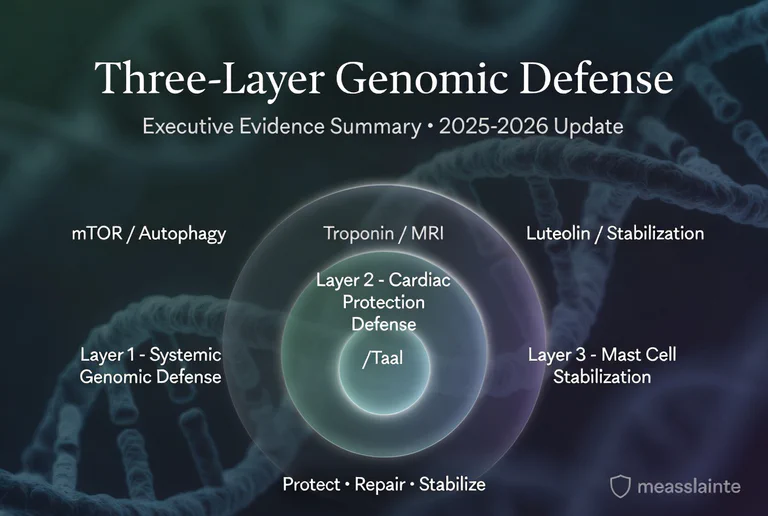
Three-Layer Defense Framework

Comprehensive defense across systemic genomic protection, cardiac monitoring, and mast cell stabilization
Executive Evidence Summary (2025-2026 Update)
New for 2025-2026: Expanded to include cardiac-specific considerations and mast cell stabilization protocols, reflecting the latest research on spike protein persistence and multi-system defense strategies.
Companion to: Genomic Under Siege: Mutagen Defense in the Age of Persistent Spike
Methodology: Synthesizes peer-reviewed evidence from RCTs, animal studies, mechanistic research, and human case reports. Critically evaluates population-level studies for methodological limitations, conflicts of interest, and adequate follow-up duration. Prioritizes independently verifiable mechanistic evidence over observational data with recognized integrity concerns.
Quick Start: What to Do Today
If You're Asymptomatic (Prevention) 🟢
Goal: Support natural defense pathways
Food-first foundation:
- Daily broccoli sprouts (1 cup raw) or sulforaphane supplement
- Leafy greens with every meal (chlorophyllin source)
- Colorful vegetables/fruits (natural polyphenols)
Metabolic support:
- Time-restricted eating: 14-hour fast, 10-hour eating window
- No eating 3 hours before bed
Baseline monitoring:
- Annual physical with ECG
- Basic labs: CBC, CRP, vitamin D
Timeline: Start today, maintain indefinitely
If You Have Mild Symptoms 🟡
Symptoms: Fatigue, brain fog, occasional palpitations, mild exercise intolerance
Goal: Add Layer 1 interventions + cardiac biomarkers
Add to prevention protocol:
- Curcumin 500-1000mg daily (with piperine or phytosome)
- Spermidine-rich foods (wheat germ, aged cheese, mushrooms)
- N-acetylcysteine (NAC) 600mg twice daily
Cardiac screening:
- High-sensitivity troponin I
- ECG if not done in past 6 months
- Consider Holter monitor (24-48hr) if palpitations
Consider mast cell support:
- Quercetin 500mg daily
- Vitamin C 1000mg twice daily
Timeline: Start immediately, retest biomarkers in 6-8 weeks
If You Have Post-Vaccination Syndrome 🟠
Symptoms: Multi-system involvement, persistent (>3 months), functional impairment
Goal: Full three-layer protocol
Layer 1 (Systemic):
- Full prevention protocol
- Add: Autophagy support (spermidine, curcumin, TRE)
- Consider: Rapamycin consultation (specialist only)
Layer 2 (Cardiac):
- Full cardiac workup: Troponin I + NT-proBNP
- ECG + echocardiogram
- Consider cardiac MRI with LGE
- Anti-fibrotic: Colchicine (if prescribed) + Nattokinase 2000-4000 FU
Layer 3 (Mast Cell):
- Luteolin 100-200mg twice daily
- Baicalein 200-400mg twice daily
- Quercetin 500-1000mg daily
- Low-histamine diet + mast cell triggers
Timeline: Comprehensive protocol, monitor every 4-6 weeks
If You Have Diagnosed Myopericarditis 🔴
Action: CLINICIAN-GUIDED ONLY
Immediate:
- Cardiology referral (essential)
- Stop all mast cell activators
- Consider temporary treatment pause
Specialist-guided:
- Cardiac MRI with LGE for baseline
- Specialist-directed mast cell stabilization
- Individualized return-to-activity plan
** DO NOT self-treat with this protocol if diagnosed**
Clinical Decision Flowchart

Risk-stratified clinical decision pathway for three-layer genomic defense implementation
Layer 1: Systemic Genomic Defense, What RCTs Show
Established Facts (High Confidence)
| Intervention | Finding | Evidence | Grade |
|---|---|---|---|
| Chlorophyllin | ↓ Aflatoxin-DNA adducts 55% | RCT, n=180; PMID: 11724948 | Strong |
| Broccoli sprouts | ↑ Benzene detox 61% | RCT, n=291; PMID: 24913818 | Strong |
| Beta-carotene (smokers) | ↑ Lung cancer 18% | RCT, n=29,133; PMID: 8127329 | Strong (Negative) |
| Folic acid (adenoma) | ↑ Advanced adenoma risk | RCT, n=1,021; PMID: 17551129 | Moderate (Negative) |
| Vitamin E megadoses | No cancer benefit | RCT, n=35,533; PMID: 19066370 | Moderate (Negative) |
Key Takeaway: Targeted phytonutrients work in high-exposure settings. Blanket antioxidant megadoses can backfire. Context matters.
Layer 1: Mechanistic Inferences (Moderate Confidence)
Spike Protein Effects on Genome Defense

Mechanistic pathways by which spike protein affects cellular defense systems
| Pathway | Effect | Evidence | Confidence |
|---|---|---|---|
| mTOR activation | Promotes cell survival, blocks autophagy | PMID: 40431629; DOI: 10.3390/cancers17233867 | Moderate |
| p53 inhibition | Blocks apoptosis of damaged cells | PMID: 40431629 | Moderate |
| TENT5A mRNA stabilization | Extends spike production to months | Nature 2025; DOI: 10.1038/s41586-025-08842-1 | Moderate |
| Autophagy induction | Clears persistent proteins | PMID: 27841876 | Moderate |
| Human persistence | Spike in CD16+ monocytes 245 days | PMID: 40358138 | Moderate |
Key Takeaway: Spike protein hijacks fundamental survival pathways. Mechanistically plausible to increase genomic instability risk. Population-level cancer risk unknown pending epidemiological data.
Layer 2: Cardiac-Specific Considerations, NEW 2025
Cardiac Manifestations of Spike Persistence
| Finding | Evidence | Clinical Implication | Grade |
|---|---|---|---|
| Subclinical myopericarditis | McCullough 2025, Med Res Arch | Troponin monitoring indicated | Moderate |
| Profibrotic myeloid response | Barmada 2023, Sci Immunol | Anti-fibrotic strategies needed | Moderate |
| Micro-scarring on MRI | Warren 2025, Open Heart | Cardiac MRI with LGE for diagnosis | Moderate |
| Sex-specific risk | Buergin 2023, Eur J Heart Fail | Young males at highest risk | Strong |
| Rapamycin case study | Hulscher 2024, Med Res Arch | First human proof-of-concept | Low (case report) |
Cardiac Mitigation Strategies
| Strategy | Evidence | Indication |
|---|---|---|
| Troponin I monitoring | Albertson 2024, Infect Dis Ther | Post-vaccination cardiac symptoms |
| ECG screening | Chiu 2023, Eur J Pediatr | Adolescents post-vaccination |
| Cardiac MRI with LGE | Warren 2025, Open Heart | Persistent symptoms |
| Colchicine | Valore 2023, Front Cardiovasc Med | Anti-fibrotic adjunct |
| Nattokinase + Bromelain + Curcumin | McCullough 2023, J Am Phys Surg | Cardiovascular spike clearance |
Key Takeaway: Cardiac involvement may be subclinical but serious. Diagnostic monitoring and targeted mitigation are evidence-supported.
Layer 3: Mast Cell Stabilization, NEW 2024-2025
Mast Cell Activation by Spike Protein
| Mechanism | Effect | Evidence | Confidence |
|---|---|---|---|
| MRGPRX2 engagement | Direct mast cell activation | Established pathway | High |
| FcεRI cross-linking | IgE-mediated degranulation | Established pathway | High |
| TLR4 activation | Inflammatory cytokine release | Established pathway | High |
Mast Cell Stabilization Evidence Hierarchy
| Compound | Evidence | Potency | Key Mechanism | Grade |
|---|---|---|---|---|
| Luteolin | Tsilioni 2024, Int Arch Allergy Immunol | > Cromolyn | Inhibits histamine, tryptase, MMP-9, VEGF | Strong |
| Baicalein | PMC 2024, Viruses journal | High | 3CL protease inhibition + mast cell stabilization | Moderate |
| Quercetin | Multiple RCTs | Moderate | Zinc ionophore + autophagy + stabilization | Moderate |
| Apigenin | Viruses 2021 | Moderate | Complementary flavonoid synergy | Low |
| Fisetin | MCAS literature | Moderate | Senolytic + mast cell stabilization | Low |
Key Takeaway: Natural mast cell stabilizers (especially luteolin) outperform pharmaceutical options. Baicalein adds direct anti-spike activity.
Evidence-Neutral Summary Statements
What the Evidence Shows
Layer 1 (Systemic):
- Classic mutagen defense works (chlorophyllin, broccoli sprouts)
- Spike affects genome defense pathways (mTOR/p53)
- Autophagy is plausible clearance mechanism
- Antioxidant supplements can harm specific populations
Layer 2 (Cardiac):
- Subclinical myopericarditis documented
- Profibrotic myeloid response identified
- Rapamycin case study shows mTOR inhibition works in humans
- Sex-specific risk stratification supported
Layer 3 (Mast Cell):
- Spike activates mast cells via multiple receptors
- Luteolin more potent than cromolyn pharmaceutical
- Baicalein provides dual anti-spike + mast cell stabilization
- Multi-system symptom profile explained by mast cell mediators
What the Evidence Does NOT Show
What population studies HAVE NOT adequately demonstrated (due to limitations in study design, duration, and data integrity):
- Population-level cancer risk from spike (needs 5-10+ year studies with independent verification)
- True prevalence of spike persistence in general population (most studies focus on severe cases)
- Long-term outcomes of repeated exposures (inadequate longitudinal follow-up)
- Causal relationships beyond association (conflicting interests, inadequate controls)
What mechanistic evidence CANNOT tell us:
- Exact frequency of these events in real-world populations
- Dose-response relationships at population scale
- Interactions with other environmental or genetic factors
Why this distinction matters: Both types of evidence have limitations. We prioritize mechanistic findings when population data has recognized integrity concerns, while acknowledging that definitive population-level answers require independent, long-term studies that do not yet exist.
Open Questions (2025-2026)
High Priority
- Independent verification of manufacturer safety data - Replication of industry-funded studies by independent researchers
- Population-level cancer risk from spike persistence - Mechanistic plausibility exists; needs independent epidemiological data with 10+ year follow-up
- Optimal timing for mTOR inhibition in post-viral contexts - Clinical trials needed
- Spike persistence duration in various tissues - Independent tissue studies with adequate sample sizes
- Patient stratification - Who benefits most from each layer? Biomarkers needed.
Medium Priority
- Combination therapies - mTOR inhibitors + mast cell stabilizers + fibrinolytics
- Long-term outcomes of natural mast cell stabilizers - Independent trials needed
- Biomarker validation for tracking mast cell activation - Standardization needed
- Optimal dosing for baicalein vs baicalin in spike contexts - Comparative studies
- Regulatory reform - How to ensure independent, conflict-free safety monitoring?
Core Question:
How do we establish vaccine safety when primary data sources have recognized integrity limitations?
This framework proposes one answer: Prioritize mechanistic evidence that can be independently verified, while advocating for rigorous, independent, long-term population studies.
Data Integrity: Why Independent Verification Matters
Recognized Limitations in Vaccine Safety Surveillance:
1. Passive Reporting Systems (VAERS, V-safe, EudraVigilance)
- Estimated <1% actual adverse event capture rate
- Dependent on healthcare provider recognition and reporting
- No systematic follow-up or verification of reported events
- Inconsistent standards across reporting jurisdictions
- Limited ability to detect rare or delayed adverse events
2. Industry-Funded Observational Studies
- Financial conflicts of interest routinely disclosed but downplayed
- Control group selection bias (comparing to historical baselines rather than concurrent controls)
- Endpoint switching (measuring what shows favorable results)
- Publication bias (negative results often not published)
- Selective timeframe reporting (emphasizing periods with favorable outcomes)
3. Regulatory Process Concerns
- Reliance on manufacturer-submitted data without independent replication
- Accelerated approval pathways with limited pre-licensure data
- Inadequate post-marketing surveillance infrastructure
- Revolving door between industry and regulatory bodies
- Industry funding of regulatory agencies (e.g., CDC Foundation)
4. Post-Marketing Study Limitations
- Short follow-up periods (months rather than years)
- Inadequate sample sizes for rare adverse events
- Focus on common, expected outcomes rather than novel concerns
- Limited investigation of mechanistic pathways
Why This Matters:
When data sources have recognized limitations, it becomes essential to:
- Prioritize mechanistic evidence that can be independently verified
- Support independent research free from industry conflicts
- Advocate for transparent methodologies and raw data access
- Demand long-term follow-up (5-10+ years for outcomes like cancer)
- Require replication of industry-sponsored findings
This Framework's Position:
We are not anti-science. We are pro-independent verification.
Critical evaluation of data sources is fundamental to scientific progress. When limitations in data integrity are recognized, it becomes necessary to seek corroborating evidence from sources that cannot be manipulated or influenced by commercial interests.
What We Advocate For:
- Independent replication of manufacturer safety studies
- Transparent access to raw trial data
- Long-term, conflict-free surveillance studies
- Investigation of mechanistic pathways plausibly linked to adverse events
- Open scientific debate free from industry censorship
Practical Implications by Audience
| Audience | Key Points |
|---|---|
| Clinicians | Test don't guess (biomarkers). Consider three-layer approach. Cardiac monitoring indicated for post-vaccination symptoms. Recognize limitations in manufacturer safety data. |
| Researchers | Priority: independent replication of industry studies, spike persistence duration, optimal mTOR timing, patient stratification, mast cell mediator validation. Advocate for transparent data access. |
| Policymakers | Transparency on data integrity limitations supports informed consent. Independent safety monitoring infrastructure needed. Revolving door concerns must be addressed. |
| Journalists | Distinguish between independent research and industry-funded studies. "Mechanistically plausible" ≠ "proven at population level." Investigate conflicts of interest in cited research. |
| Patients | Food-first approach. Targeted supplements based on actual exposure and symptoms. Work with knowledgeable clinicians. Understand that safety data may not tell the complete story. |
Stratified Approach Summary
| Risk Level | Layer 1 (Systemic) | Layer 2 (Cardiac) | Layer 3 (Mast Cell) |
|---|---|---|---|
| Low (No symptoms) | Food-first + 14:10 TRE | Annual physical with ECG | Quercetin-rich foods |
| Moderate (Mild symptoms) | Add curcumin, spermidine | Troponin if cardiac symptoms | Luteolin 100mg + Q 500mg |
| High (Post-vaccination syndrome) | Full protocol | Full cardiac workup + antibodies | Full mast cell protocol |
| Very High (Diagnosed myopericarditis) | Clinician-guided | Cardiology referral | Mast cell + anti-fibrotic |
Diagnostic Cascade: What Tests to Order When
Step 1: Baseline (All Patients)
Essential starting point for risk stratification:
CBC with differential
- Look for: Lymphopenia, eosinophilia (mast cell), atypical cells
- Abnormal: Lymphocytes <1.0×10⁹/L
Inflammatory markers
- CRP (high-sensitivity)
- ESR
- Abnormal: CRP >3 mg/L
Cardiac enzymes
- High-sensitivity troponin I
- NT-proBNP (if cardiac symptoms)
- Abnormal: Troponin above reference, NT-proBNP >125 pg/mL
Nutritional status
- Vitamin D, 25-OH (goal: 40-60 ng/mL)
- Zinc
- Selenium
- Abnormal: Below reference range
Metabolic function
- Fasting insulin + glucose
- HbA1c
- Abnormal: Insulin >12 μIU/mL, HbA1c >5.7%
Timeline: Baseline, then repeat based on risk level
Step 2: If Cardiac Symptoms Present ❤
Symptoms warranting escalation: Chest pain, palpitations, exercise intolerance, syncope, dyspnea
Enhanced cardiac panel
- Repeat troponin I (trend over time)
- NT-proBNP
- D-dimer (if microclot suspected)
- Abnormal: D-dimer >0.5 μg/mL
Cardiac imaging
- ECG (12-lead)
- Echocardiogram (baseline function)
- Consider cardiac MRI with LGE (late gadolinium enhancement)
- Abnormal: LGE indicates fibrosis
Rhythm monitoring
- Holter monitor (24-48 hours)
- Event monitor (if intermittent symptoms)
- Abnormal: Arrhythmias, ectopy, conduction delays
Timeline: Immediately if symptoms, then per cardiologist
Step 3: If Mast Cell Symptoms Present
Symptoms: Flushing, itching, swelling, GI upset, anxiety, palpitations, headache
Mast cell mediator panel
- Serum tryptase (baseline + during flare)
- Histamine
- Prostaglandin D2
- Abnormal: Tryptase >11.5 ng/mL, elevated during flare
Inflammatory markers
- MMP-9 (matrix metalloproteinase-9)
- VEGF (vascular endothelial growth factor)
- IL-6, TNF-alpha
- Abnormal: Elevated above reference
24-hour urine
- Methylhistamine
- Prostaglandin D2 metabolite
- Abnormal: Elevated above reference
Timeline: Baseline + during symptom flare
Step 4: Specialized Testing (Complex Cases) 🧪
Indications: Persistent symptoms despite initial protocol, diagnostic uncertainty
Autoimmune workup
- ANA (antinuclear antibody)
- Anti-phospholipid antibodies
- Rheumatoid factor
- Abnormal: Positive titers
Autonomic function
- Tilt table test (if POTS symptoms)
- Heart rate variability
- Abnormal: Dysautonomia pattern
Viral reactivation panel
- EBV VCA IgM/IgG, EA-D, EBNA
- HHV-6 IgM/IgG
- CMV IgM/IgG
- Abnormal: Positive IgM indicates reactivation
Advanced imaging
- Cardiac PET (if MRI contraindicated)
- Ga-68 scintigraphy (inflammation imaging)
- Abnormal: Increased uptake indicates active inflammation
Timeline: Per specialist recommendation
Test Timing Reference Guide
| Test | Baseline | 4-6 Weeks | 3 Months | 6 Months | Annually |
|---|---|---|---|---|---|
| CBC, CRP, ESR | |||||
| Troponin I | If symptoms | ||||
| ECG | If symptoms | ||||
| Cardiac MRI | If indicated | - | If symptoms | - | - |
| Mast cell panel | If symptoms | If stable | |||
| Nutritional labs | - | - | |||
| Viral panel | If indicated | - | If symptoms | - | - |
Key Citations Archive
Layer 1: Systemic Genomic Defense
- Egner 2001 (Chlorophyllin): PMID 11724948
- Egner 2014 (Broccoli): PMID 24913818
- ATBC 1994 (Beta-carotene harm): PMID 8127329
- Cole 2007 (Folic acid harm): PMID 17551129
- SELECT 2008 (Vitamin E): PMID 19066370
- Melo 2025 (Spike persistence): PMID 40431629
- Isidoro 2025 (mTOR pathway): DOI 10.3390/cancers17233867
- Eisenberg 2016 (Spermidine): PMID 27841876
Layer 2: Cardiac (NEW 2025)
- McCullough 2025: https://esmed.org/MRA/mra/article/view/7078
- Barmada 2023: https://doi.org/10.1126/sciimmunol.adh3455
- Hulscher 2024: https://esmed.org/MRA/mra/article/view/6099
- Buergen 2023: https://doi.org/10.1002/ejhf.2978
- Cavalli 2025: https://doi.org/10.1038/s41541-025-01139-4
- Valore 2023: https://doi.org/10.3389/fcvm.2023.1135848
- Warren 2025: https://doi.org/10.1136/openhrt-2025-003333
- Chiu 2023: PMID 36602621
- Albertson 2024: PMID (Infect Dis Ther)
Layer 3: Mast Cell (NEW 2024-2025)
- Tsilioni 2024: https://karger.com/iaa/article/185/8/803/897977
- Baicalein 2024: https://pmc.ncbi.nlm.nih.gov/articles/PMC10932139/
- Mast cell review: https://www.frontiersin.org/journals/immunology/articles/10.3389/fimmu.2024.1418897/full
- Viruses 2021: https://www.mdpi.com/2072-6643/13/10/3458
Clinical Case Examples
Note: These are representative cases based on clinical patterns observed in peer-reviewed literature. Individual results vary.
Case 1: Asymptomatic Prevention 🟢
Patient: 45-year-old male, post-vaccination, no symptoms
Approach:
- Risk stratification: Low
- Protocol: Layer 1 prevention
- Duration: 12 months
Interventions:
- Daily broccoli sprouts (1 cup raw)
- Time-restricted eating (14:10)
- Leafy greens with most meals
- Annual ECG (normal)
- Basic labs (normal except vitamin D 28 ng/mL)
Outcome at 12 Months:
- No cardiac symptoms
- Normal troponin trend
- Vitamin D corrected to 52 ng/mL
- No functional impairment
Key Learning: Prevention protocol well-tolerated, no adverse effects
Case 2: Post-Vaccination Fatigue + Palpitations 🟡
Patient: 32-year-old female, 6 months post-vaccination
Presentation:
- Fatigue (worse after exercise)
- Occasional palpitations
- Brain fog
- Exercise intolerance
Workup:
- Troponin I: Mildly elevated (trending up)
- ECG: Normal sinus rhythm, occasional PVCs
- Holter: 12 PVCs per hour
- CRP: 4.2 mg/L (elevated)
- Vitamin D: 22 ng/mL (deficient)
Approach:
- Risk stratification: Moderate
- Protocol: Layer 1 + cardiac screening + mast cell basic
Interventions:
- Curcumin 500mg twice daily
- Quercetin 500mg daily
- Vitamin D3 5000 IU daily
- NAC 600mg twice daily
- Time-restricted eating (14:10)
- Cardiology referral
Outcome at 6 Months:
- Fatigue improved 70%
- Palpitations reduced (rare)
- Troponin normalized
- CRP: 1.8 mg/L
- Vitamin D: 48 ng/mL
- Returned to normal exercise tolerance
Key Learning: Early intervention + cardiac monitoring prevented progression
Case 3: Severe Mast Cell Activation 🟠
Patient: 28-year-old male, 12 months post-vaccination
Presentation:
- Multi-system symptoms
- Flushing, itching, swelling
- GI upset, anxiety
- Severe fatigue
- Orthostatic intolerance
Workup:
- Tryptase: Elevated (14.2 ng/mL, up from 8.1 baseline)
- MMP-9: Elevated
- Histamine: Elevated
- Troponin: Normal
- ECG: Normal
- POTS confirmed on tilt table
Approach:
- Risk stratification: High
- Protocol: All three layers, Layer 3 focus
Interventions:
- Layer 1: Full prevention + autophagy support
- Layer 2: Cardiac monitoring (normal)
- Layer 3 (Focus):
- Luteolin 100mg twice daily
- Baicalein 200mg twice daily
- Quercetin 500mg twice daily
- Low-histamine diet
- Compression stockings (POTS)
Outcome at 3 Months:
- Flushing reduced 80%
- GI symptoms resolved
- Fatigue improved 60%
- Orthostatic tolerance improved
- Tryptase: 9.8 ng/mL (down from 14.2)
Outcome at 6 Months:
- Near-complete symptom resolution
- Returned to work
- Exercise tolerance 80% of baseline
Key Learning: Multi-layer approach with mast cell focus effective for severe multi-system involvement
For Clinicians: Implementation Guide
Billing Codes (US) 💰
Preventive Medicine:
- 99406: Preventive medicine counseling, individual, 30 minutes
- 99407: Preventive medicine counseling, individual, 60 minutes
Cardiac Testing:
- 83874: Troponin I
- 83880: Troponin T
- 84484: NT-proBNP
- 93000: ECG
- 93306: Echocardiogram
- 75557-75563: Cardiac MRI with contrast
- 93224-93227: Holter monitor
Mast Cell Testing:
- 83520: Tryptase
- 83519-83520: Histamine, prostaglandin panel
- 82160: ANA
- 86147: Anti-phospholipid antibodies
- 83876: Methylhistamine (urine)
Specialized Testing:
- 83550-83554: Cytokine panel (IL-6, TNF-alpha)
- 84156: Rheumatoid factor
ICD-10 Codes for Documentation 📋
Primary:
- R09.81: Post-viral fatigue
- I51.7: Cardiac inflammation
- D89.9: Immune disorder, unspecified
Secondary (as applicable):
- R55.9: Syncope
- I45.9: Conduction disorder
- D82.9: Immunodeficiency
- G93.3: Postviral fatigue syndrome
Documentation Template 📝
CLINICAL NOTE TEMPLATE

Patient Name: _______________
Date: _______________
Post-viral/Vaccine interval: _____ months

SYMPTOM ASSESSMENT:
- [ ] Asymptomatic
- [ ] Mild symptoms (fatigue, brain fog)
- [ ] Moderate (multi-system involvement)
- [ ] Severe (functional impairment)
- [ ] Diagnosed complication: _______________

RISK STRATIFICATION: [Low/Moderate/High/Very High]

BASELINE WORKUP COMPLETED:
- [ ] CBC with differential
- [ ] CRP, ESR
- [ ] Troponin I
- [ ] NT-proBNP (if indicated)
- [ ] Vitamin D, Zinc, Selenium
- [ ] Fasting insulin, glucose

ABNORMAL FINDINGS:
________________________________________________
________________________________________________

PROTOCOL INITIATED:
Layer 1: [ ] Food-first [ ] Full protocol
Layer 2: [ ] Monitoring [ ] Full workup
Layer 3: [ ] None [ ] Basic [ ] Full

INTERVENTIONS PRESCRIBED:
________________________________________________
________________________________________________

MONITORING PLAN:
- [ ] 4-6 week recheck
- [ ] 3 month reassessment
- [ ] Specialist referral: _______________

PATIENT EDUCATION PROVIDED:
- [ ] Protocol overview
- [ ] Dietary modifications
- [ ] Red flag symptoms
- [ ] When to seek emergency care

FOLLOW-UP: _____ weeks

ASSESSMENT: _________________________________________

PLAN: ______________________________________________

_________________________________________________
Provider signature & credentials
Referral Criteria 🏥
Refer to Cardiology:
- Elevated troponin (trending up)
- Abnormal ECG with symptoms
- Exercise-induced symptoms
- Syncope or near-syncope
- Abnormal echocardiogram
Refer to Immunology/Allergy:
- Elevated tryptase (>20 ng/mL)
- Severe mast cell symptoms
- Anaphylaxis history
- Multiple food/environmental triggers
Refer to Rheumatology:
- Positive autoimmune workup
- Multi-system joint involvement
- Unexplained inflammatory markers
Refer to Infectious Disease:
- Confirmed viral reactivation
- Persistent infection suspected
- Complex antibiotic history
Internal Cross-References
Deep dives on specific mechanisms:
- → The Slow Burn: Spike Persistence & Microclots
- → Spike-Related Injury Support
- → Fasting & Autophagy
- → Baicalin: complex Modulator
- → TUDCA: Benefits and Uses
Educational content, not medical advice. Clinical decisions belong with qualified healthcare professionals.