Table of Contents
Declaration of Purpose This article summarizes scientific research on Cayenne pepper's bioactive compounds, primarily capsaicin. All claims are graded by evidence strength. Not medical advice, consult healthcare providers before therapeutic use.
TL;DR (1-minute read)
- Thermogenesis: Capsaicin activates TRPV1 → increases energy expenditure [AN], CONFIDENCE: MODERATE
- Antioxidant: Upregulates SOD/GPx enzymes via redox signaling [AN], CONFIDENCE: MODERATE
- Cardiovascular: Vasodilation via NO production; antiplatelet effects [AN/PP], CONFIDENCE: LOW-MODERATE
- Pain relief: Substance P depletion through TRPV1 desensitization [PR], CONFIDENCE: HIGH (topical)
- Gaps: Human RCTs limited; dosing not standardized
- Not for: GERD, ulcers, bleeding disorders, or children without medical supervision
Introduction: Beyond Culinary Use
Cayenne pepper (Capsicum annuum) contains a complex matrix of bioactive compounds, primarily capsaicinoids (capsaicin), vitamins, carotenoids, and phenolic compounds. These constituents modulate cellular pathways, regulate metabolic processes, and neutralize oxidative stress.
Evidence Context: Much of the research is in vitro or animal models. Human clinical trials exist but are limited in size and duration.
Evidence Summary Table
| Mechanism | Evidence Type | Confidence | Key Findings |
|---|---|---|---|
| TRPV1 activation → Thermogenesis | [AN] Animal/In vitro | MODERATE | Increased energy expenditure in mice; human data mixed |
| Antioxidant enzyme upregulation (SOD/GPx) | [AN] Cell studies | MODERATE | Redox signaling modulation demonstrated |
| Vasodilation (NO-mediated) | [AN] Animal | LOW-MODERATE | Rat studies show BP reduction; human RCTs limited |
| Substance P depletion → Pain relief | [PR] Human trials | HIGH | Topical capsaicin FDA-approved for neuropathic pain |
| Lipid metabolism modulation | [PP] Small human trials | LOW-MODERATE | LDL reduction observed; needs larger RCTs |
| Antimicrobial activity | [AN] In vitro | LOW | Petri dish effects; in vivo relevance uncertain |
Cellular Mechanisms Overview
Cellular Dynamics of Cayenne's Bioactive Compounds
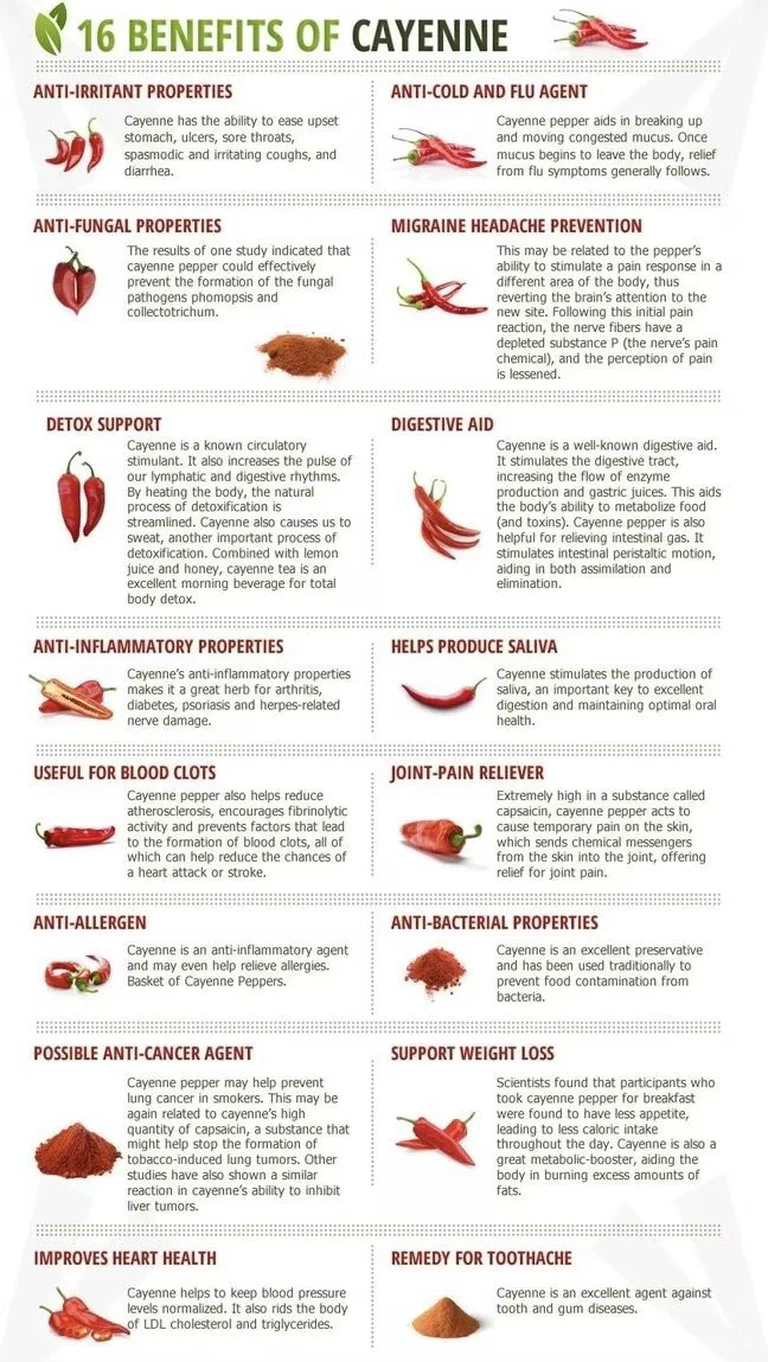
Cayenne's therapeutic effects are largely attributed to its rich profile of phytochemicals, including capsaicinoids (primarily capsaicin), vitamins, carotenoids, and phenolic compounds. These constituents act on specific cellular pathways to elicit diverse health benefits:
1. Antioxidant Network Activation
Evidence Level: [AN] In vitro/animal studies, CONFIDENCE: MODERATE for mechanism
The human body is constantly challenged by oxidative stress. Cayenne's antioxidant profile includes vitamin C, beta-carotene, lycopene, and phenolic compounds.
- Redox Signaling: Cayenne compounds upregulate endogenous antioxidant enzymes superoxide dismutase (SOD) and glutathione peroxidase (GPx) via redox signaling modulation, more efficient than direct scavenging. [AJOL 2022] [AN]
- Mitochondrial Protection: Antioxidants protect mitochondria from oxidative damage, preserving energy production. Impaired mitochondrial function is linked to numerous diseases. Source: Phytochemical status and antioxidant capacity of hot pepper varieties [AN]
2. Metabolic Regulation and Capsaicin's Role
Evidence Level: [AN/PP] Mixed, CONFIDENCE: MODERATE for mechanism, LOW for weight loss in humans
Capsaicin influences metabolic processes through:
- Thermogenesis: Activates TRPV1 receptor → increases heat production and energy expenditure. [FASEB 2012] [AN]
- Lipid Metabolism: May decrease LDL, increase HDL via gene modulation. Human data limited. Source: Effects on metabolic dysregulation [AN]
- Insulin Sensitivity: AMPK activation may improve insulin sensitivity (type 2 diabetes relevance). Emerging evidence, needs human RCTs.
3. Cardiovascular Effects
Evidence Level: [AN] Animal studies, CONFIDENCE: LOW-MODERATE; human data sparse
- Vasodilation: Capsaicin promotes nitric oxide (NO) release → blood vessel relaxation → potential blood pressure reduction. [Consensus App] [AN]
- Antiplatelet Effects: Inhibits platelet aggregation, reducing thrombosis risk. Mechanism not fully characterized. Source: Formulation and Evaluation of Logenzes [AN]
4. Pain Modulation (Strongest Evidence)
Evidence Level: [PR] Human clinical trials, CONFIDENCE: HIGH for topical use
- Substance P Depletion: Prolonged TRPV1 activation depletes Substance P (pain neuropeptide) → analgesia. FDA-approved for post-herpetic neuralgia, diabetic neuropathy. [PR]
- Desensitization: Repeated TRPV1 activation reduces pain signaling over time.
Beyond the Core: Additional Biological Effects
- Gastrointestinal Modulation: May stimulate digestive enzymes, improve motility. Evidence: Anecdotal/limited, cayenne can worsen GERD/ulcers in susceptible individuals.
- Antimicrobial Activity: In vitro inhibition of microbes shown. In vivo relevance uncertain. Source: Phytochemical Composition and Activities [AN]
Counter-Evidence & Limitations
How this model could be wrong or overstated:
| Claim | Counter-Evidence | Limitation |
|---|---|---|
| Weight loss via thermogenesis | Human RCTs show minimal effect at culinary doses; adaptation may occur | Most data from mice; human thermogenesis response blunted |
| Blood pressure reduction | Some studies show no significant effect vs placebo | Small sample sizes; short duration |
| Lipid improvement | Conflicting results; diet/exercise confounders | Not consistently replicated |
| Metabolic benefits | Effects may be transient; tolerance develops | Long-term adherence data lacking |
| GI health claims | Capsaicin can irritate gastric mucosa; worsens GERD symptoms | Contra-indicated for ulcers, IBD flares |
Key Gaps in Evidence:
- Large, long-term human RCTs (>6 months)
- Standardized dosing protocols
- Population with comorbidities
- Drug interaction studies
- Pediatric safety data
Clinical Considerations
Contra-indications:
- GERD, peptic ulcers, IBD
- Bleeding disorders (antiplatelet effects)
- Pregnancy/breastfeeding (insufficient data)
- Children (safety not established)
Drug Interactions (Potential):
- Anticoagulants/antiplatelets (additive effect)
- ACE inhibitors/BP meds (additive hypotension)
- Theophylline (metabolism may be affected)
Conclusion
Cayenne pepper contains bioactive compounds with demonstrated mechanisms of action in cellular and animal models. The strongest clinical evidence supports topical capsaicin for pain relief (FDA-approved). Systemic benefits (metabolism, cardiovascular) have biological plausibility but limited human trial evidence.
Bottom Line: Culinary use as a spice is generally safe and may provide health benefits. Therapeutic dosing requires medical supervision, especially for those with cardiovascular or GI conditions.
Source Library
Primary Research
- Phytochemical status and antioxidant capacity of hot pepper varieties, AJOL 2022, [AN] In vitro antioxidant assays
- Proximate and Phytochemical Properties of Cayenne Pepper, IJRPR, [AN] Phytochemical analysis
- Effects on metabolic dysregulation, FASEB 2012, [AN] Animal metabolism studies
- Phytochemical Composition, Antiradical, Antimicrobial Activities, 2018, [AN] In vitro antimicrobial
- Anticoagulant formulation evaluation, [AN] Antiplatelet effects
Clinical Evidence
- Topical capsaicin for neuropathic pain, Multiple RCTs, FDA-approved, [PR] HIGH confidence
- Human metabolic trials, Limited, mixed results, [PP] LOW-MODERATE confidence
Reviews & Context
- TRPV1 receptor mechanisms, Established in pain literature
- Capsaicin safety profile, Generally recognized as safe (GRAS) at culinary doses
- Drug interaction potential, Theoretical, clinical reports rare
Risk of Bias Assessment
| Domain | Risk | Note |
|---|---|---|
| Study quality | Moderate | Many small studies, industry funding in some |
| Human relevance | Low-Moderate | Much data from animals/in vitro |
| Reporting bias | Moderate | Positive results more likely published |
| Dose standardization | Low | Wide range of doses/forms used |