Health evidence reviews, original sequence research, mechanisms and documentary investigations: the clearance-and-tolerance framework, pathway mechanics, and the natural compounds that act as levers within it.
Investigations into natural compounds, cellular health mechanisms, and evidence-based wellness protocols.
Featured: The Spikeopathy Research Cluster
The most developed work on this site. A unified framework for chronic spike-related illness as systemic clearance and tolerance failure under persistent antigenic drive: pathway mechanics (mTOR, glymphatic, SIRT1), five mechanistic subtypes, a tiered biomarker matrix, and intervention protocols. Evidence-graded, primary-source, falsifiable.
Residual DNA in Comirnaty and Spikevax: What the Independent Reanalysis Found
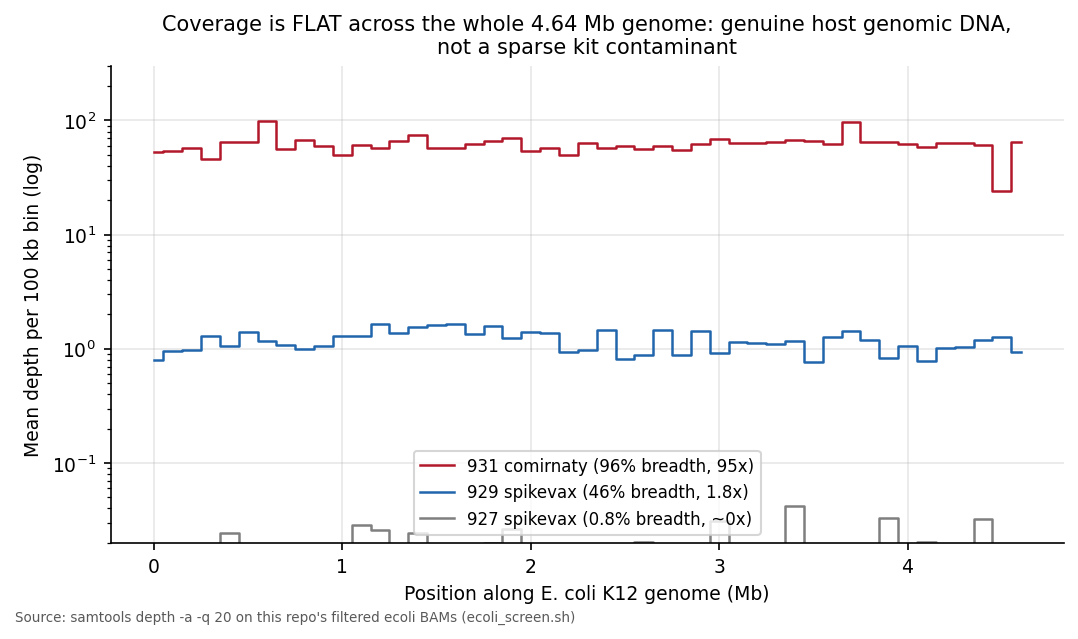
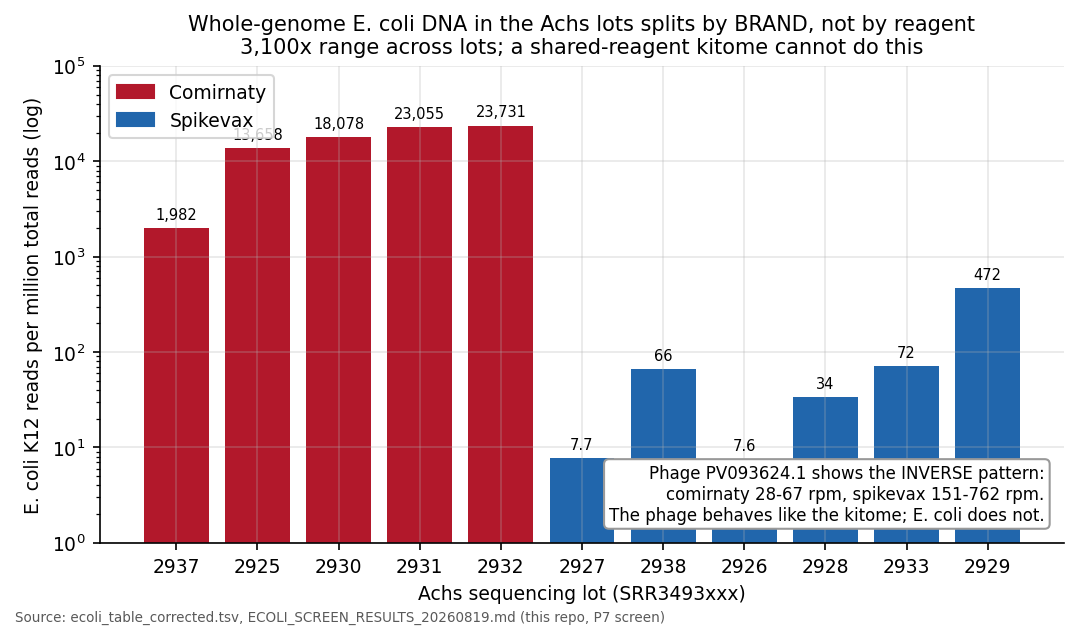
The independent reanalysis is now published as a versioned preprint. Fifteen public sequencing runs and 554 regulatory documents, one record: E. coli host-genome DNA in Comirnaty runs that plasmid-targeted qPCR cannot see, an SV40 promoter-enhancer-origin region at depth in all nine Comirnaty lots, lot-to-lot variation in Spikevax, published TGA measurements from single-target plasmid qPCR (for Spikevax the released method names kanamycin resistance as the only target; for Comirnaty no released document names the target at all), run, per the TGA's own page, as an additional check rather than a batch-release criterion, and an EMA compliance record the public cannot check. What the numbers show, what they do not show, and how to reproduce every one of them.
The Host Genome They Said Was Not There: The Achs Sequencing Deposit Against the Achs Paper
Achs et al. (npj Vaccines, December 2025) concluded no excessive DNA impurities and no host-genome carryover. An independent re-mapping of the sequencing data they deposited (PRJNA1303864) shows the second conclusion is false and the first is contested on its own arithmetic: near-complete E. coli genomic DNA in four of five Comirnaty lots at 1.4-2.4 percent of all reads (96 percent genome breadth, 56-95x mean depth), whole circular plasmid in every lot, and an RNA:DNA hybrid footprint in their own fragment lengths. The method critique is McKernan, Speicher and Rose's. The deposit analysis is what this article adds.
Ask Your Regulator: The December 2023 Investigations
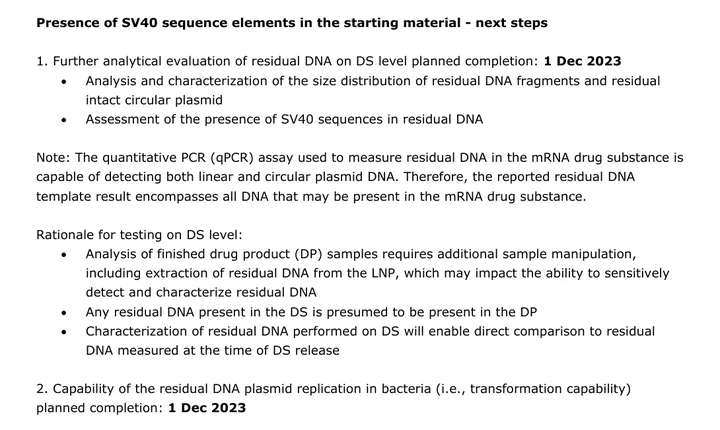
In October 2023 the EMA's Biologics Working Party put two investigations in writing with a 1 December 2023 completion date: analytical characterisation of residual DNA including fragment sizes, intact circular plasmid and SV40 sequences, and bacterial transformation capability. Part of that programme is now public. The rest, including the transformation testing, the batch-level dataset and any reassessment after Achs et al. (2025), is not. This page gives you the questions to file with eight authorities, written to be answered, plus the route for filing each one.
The BNT162b2 Plasmid Map: What EMA Confirmed and What the Public Sequence Shows
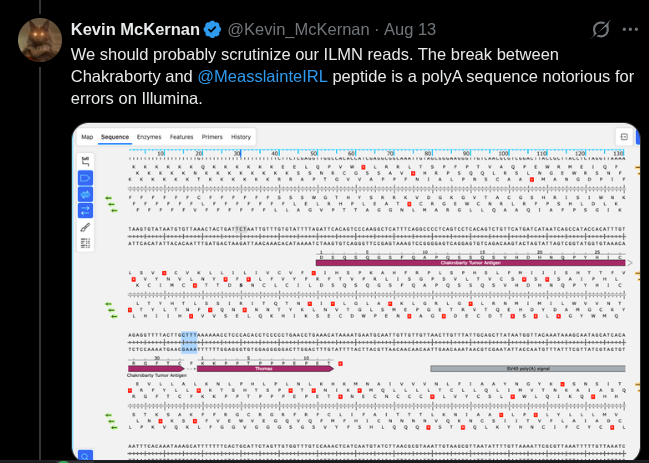
Using the EMA's own BWP position paper (released under ASK-289849) and the public GenBank deposit OR134577.1, an independent annotation of the BNT162b2 plasmid. The SV40 footprint is 695 bp, the backbone traces to the 1981 pSV2 vector family, and the integration property has been documented for 45 years.
Nobiletin and Eriodictyol: Potent Citrus Flavonoids for Inflammation and Cellular Defense
Guide to nobiletin and eriodictyol, potent citrus flavonoids that combat inflammation, support antioxidant defenses, and attenuate endotoxin-induced inflammatory signaling.
Personalized Health Restoration: A Framework for Post-Pandemic Recovery
Your biology is unique. What helps one person recover may not help you or could make things worse. This framework guides you through systematic assessment and targeted interventions based on your specific health terrain.
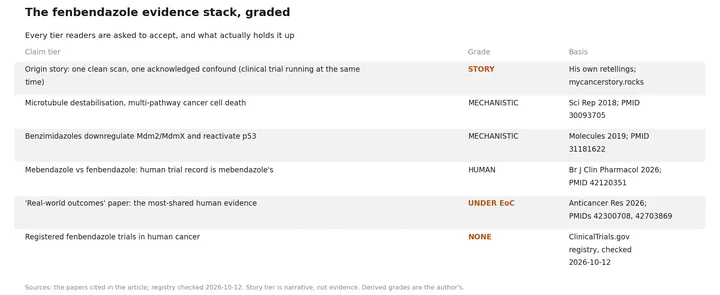
Fenbendazole and Cancer: One Scan, an Honest Confound, and What the Papers Actually Show
The fenbendazole story graded from the origin to 2026: one man's clean scan with an acknowledged confound, real mechanisms (microtubules, p53 activation), one systematic review with actual human data in brain tumours, and the most-shared 'human evidence' paper now under Expression of Concern.
Cannabinoids and Exosome Release: The Lever the Relay Model Implies
The exosome relay article ended on a lever it never examined: if vesicles are a transport layer, does anything turn vesicle release down? CBD is the best-studied release inhibitor in the cell-culture literature. The release findings, the autophagy arm underneath them, the entry-blockade arm beside them, and the junction with vaccine-derived vesicles that nobody has measured. With the cannabis-genomics side of Kevin McKernan's work on what a real product is.
ApoE4 and the LNP Corona: What Is Actually Known
ApoE4 carriers ask whether these products treat them differently. The question decomposes into a five-link chain: the corona is ApoE-rich and merges into the particle by fusion; ApoE is a demonstrated endogenous targeting ligand for ionizable LNPs; receptor binding is isoform-sensitive in principle; the single human genotype-stratified study was null and its power cannot be assessed from the abstract; and E4-specific corona composition has never been measured anywhere. This article walks each link at its verified grade, names the one weak weld in the chain (the siRNA-to-vaccine-lipid bridge), and states what would have to be true for the honest answer to change.
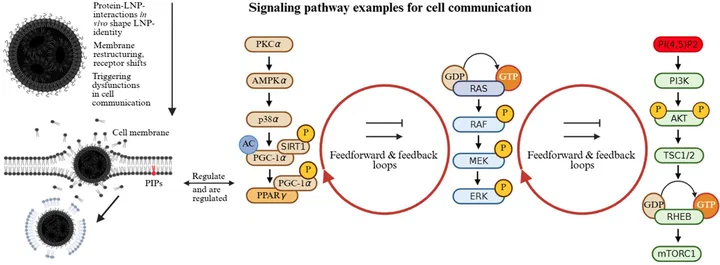
The Lipid Nanoparticle Is Not Packaging: What Biodistribution Data Actually Show
The site's forensics cluster documents what got into the vials. The persistence cluster documents what spike does once it is made. The missing layer has always been the particle itself. This article assembles the lipid-nanoparticle evidence: how LNPs acquire a biological identity in lymph and plasma, why distribution follows capillary anatomy rather than diffusion, what the regulatory and published pharmacokinetic studies actually measured, why the empty fraction of every batch is biologically active, and what the Gutschi, Seger and Seneff active-biointerface review proposes. Every load-bearing claim carries a verified primary source.
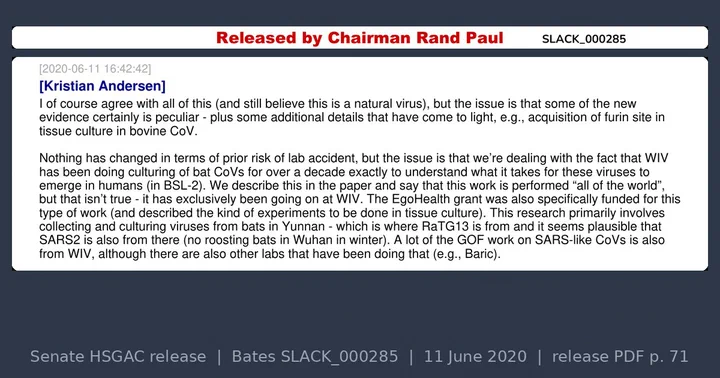
Retraction Call: Andersen et al. (2020), 'The Proximal Origin of SARS-CoV-2'
A six-ground retraction request against Andersen et al. (2020), 'The proximal origin of SARS-CoV-2', under the COPE guidelines, prepared for Nature Medicine and published here before it is filed. The documentary case rests on the July 2026 Senate release of the authors' private Slack channel and the Baric transcribed interview. Spun out from the Pinsolle Framework article, where the underlying evidence is presented.
The Exosome Relay: Spike Without a Factory
Spike detectable weeks after injection does not require genomic integration or an immortal producer cell. Maria Gutschi's Index, Persistence, Relay frame, checked against the primary literature: a finite template (Röltgen), durable protein deposits (Ogata, Röltgen), and a measured vesicle exit route (Sahay, Maugeri, Bansal). With two calibrated corrections to the analog numbers the frame is usually quoted with.
About Measslainte
Independent research by Thomas Emmett, exploring natural health protocols, cellular detox, and chronic recovery strategies. Evidence-based, no hype.
Disclaimer: This content is for educational purposes only and not medical advice. Claims are based on emerging research. Consult a healthcare professional before making changes to your diet or supplement regimen, especially if you have underlying health conditions or are taking medications.